Thursday, December 1, 2011

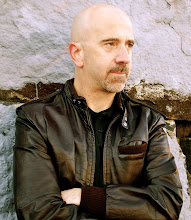
Interview with Horror Author Andrew Wolter

About this time last year, I learned of a brand-new charity drive founded by horror author Andrew Wolter. The charity was called Horror Against AIDS, and the goal was to provide toys for Christmas to children in the Phoenix, Arizona area affected by the epidemic of pediatric AIDS.

I had gotten to know Andrew Wolter through social media and our shared love of horror and dark fiction, and when he asked if I would consider supporting his cause, all I needed to do was check out the charity's website and I became an enthusiastic supporter.

Andrew is now in the middle of the second annual Horror Against AIDS toy drive, and as December 1 marks the twenty-fourth annual World AIDS day, it seems the perfect time to post my latest author interview.

Andrew Wolter is the author of the novels The Rules of Temptation, Nightfall, Much of Madness, More of Sin and the upcoming Seasons in his Abyss: A New World Mythos, as well as numerous short stories. He very graciously agreed to undergo a lengthy interrogation without the benefit of his lawyer...


You’re in the middle of your second annual charity drive, Horror Against AIDS. For those who may not be familiar with this cause, can you tell us a little bit about it?

I formed the Horror Against AIDS fundraising group in 2010 to help bring awareness and raise funds for children who are affected by HIV/AIDS. As both a dark fiction author and non-fiction columnist for a nationwide LGBT publication, I felt it would be a great idea to pull my resources from leaders and fans in the horror and LGBT communities to help in the battle against this horrible epidemic.

The funds raised through my Horror Against AIDS fundraiser go toward the purchase of toys for the children of Logan’s Playground (A Sanctuary for Children Affected by HIV). Logan’s Playground is located in Phoenix, Arizona and houses approximately 150 children whose lives have been affected by HIV. Without the help of such fundraising, these kids wouldn’t have the means to enjoy Christmas.


A toy drive seems like an unusual choice of charities for a dark fiction author. Why this particular cause?

I have always been a major supporter in the fight against HIV/AIDS. Throughout the years, I have seen a number of friends and loved ones affected by this epidemic. I have looked this untamed beast in the eyes and have suffered the horror which it has brought to the lives of those around me. It made me realize that some of the most terrifying plots in the world of horror fiction couldn't compare to the pain and hell of those affected by AIDS experience. Four years ago, I witnessed the last days of my best friend pass away from his longtime battle with HIV/AIDS. It caused my rage to come out, stronger than ever, in advocating AIDS awareness to all.

Since then, I have used what free time I've had to get involve with a number of projects revolving the LGBT community. From being an active member of the Human Rights Campaign to Thanksgiving drives benefitting the homeless, to being a strong voice in the “It Gets Better” campaign, I have done my best to use my voice to bring both tolerance and awareness to the issues affecting the LGBT community (my community).

Last year, I decided I wanted to do something more for the LGBT community. Not that everything I had done and was currently doing wasn't enough; rather, I felt the need to take the next step in making my voice heard on the issues that were closest to my heart. I thought to myself, Imagine the possibilities if you could take your strong followings from both the horror industry and LGBT community! Hence, I decided to create the group Horror Against AIDS.


During the Christmas season, many charities compete for a seemingly shrinking pool of resources. What would you say to readers who may be trying to decide what charity to donate to?

While there are many fantastic charities from which people can choose to donate, my biggest concern in this is how much of the money is truly going to the cause. Many charities claim to be “non-profit”; however, a number of them don’t consider certain overhead as an actual expense. Thus, I’m aware of several “large” charities in which 100% of the donations do not go to their cause. When donating monies to any charity, I always take it upon myself to ensure that 100% of all funds are going to the cause. This might mean having to talk with charity organizers or directors, but to know that every dime donated goes to the actual cause (this is the case with the Horror Against AIDS fundraiser) is the only factor in my decision to donate to certain charities. While I am by no means putting down charities that are household names, I prefer to stick with organizations where I know that every dime donated is accounted for.


You say you want to be known as an author without genre limitations. In an age where the so-called experts claim book sales rely on “branding” and marketability, how do you feel this affects your work?

This question comes up often.

I think my ability to go against and blend genres has definitely affected my sales (not necessarily the work itself).

I don’t feel a writer should be limited to a scene or characterization because it may be considered “over the top.” If a tale contains the fundamentals of a plausible story (beginning, middle, end, etc), it deserves to be both published and read. I don’t limit myself at all. My characters can be crude and my scenes tend to be graphic (layered with sex and gore). Ultimately, there is a moral to each of my tales and novels. That is what my readers have grown to love. I’m not afraid to mirror the pure reality of our daily lives (as much as we may want to keep certain exploits secret) into the actions and mannerisms of my characters.

Being that I don’t believe in limitations, I think the only boundaries that haven’t been pursued are those silenced by the voice of the author in the name of current trends and which books are selling thousands of units. I may not be a bestselling novelist, but my voice is strong. I’m not afraid to use it, and that is what readers enjoy about my works.

What’s most important to me is that I am content with the work I produce.


You recently released an updated and unabridged version of your 2008 novel, NIGHTFALL. What’s been added to the new version and why re-release it?

Two factors went into the re-release of NIGHTFALL. One being the availability to my readers at an affordable price; the other being the book being available with it’s original content.

One of the battles I faced with selling the initial manuscript was that the word count exceeded 150,000 words. In addition, another reason the novel was "passed up" by a couple publishers was that they felt two scenes in particular were potentially too graphic for readers (one of them incorporating bestiality). While I took such rejection in stride, I continued to shop the manuscript to other publishers. Ultimately, my persistence paid off when a small press contracted the novel. However, part of the publisher's decision to put the novel in print included cutting back the length of the book and toning down the two scenes in question previously pointed out by other potential publishers.

In August of 2008, NIGHTFALL became available to purchase. Although the original manuscript was altered and scenes omitted, the novel still made for a long book (almost 100,000 words). In a publishing world that was beginning to feel the excessive cost of printing, manufacturing and shipping such a lengthy novel, NIGHTFALL would see this reflected in its retail price. As a result, the book became available as a “collector's hardcover edition” with a hefty price tag. While it sold well, I longed to have my readers experience the book the way it was intended and at a cheaper cost.

Fast forward to 2011. With a brimming technology providing various electronic book platforms, I discovered that I could allow NIGHTFALL to be released the way it was initially intended. With the advent of Amazon Kindle, along with the growing interest in e-books, not only did I discover a way to forego the worries of a publisher's manufacturing and shipping costs, but I also found that I could present the original content of NIGHTFALL to the reader.

While the story remains the same, the unabridged version of NIGHTFALL contains additional references and those two “questionable” scenes to help further the readers experience with the characters.


Can you name some of the authors and/or works which have influenced you the most as a writer?

While there are so many great authors and works that have been a major inspiration, the following authors (and their works played a pivotal role in helping shape my writing):

Poppy Z. Brite’s DRAWING BLOOD and EXQUISITE CORPSE made me unafraid to create gay characters as major players in a story without having their sexuality become the crux of the plot.

John Rechy’s CITY OF NIGHT and THE COMING OF THE NIGHT taught me how to use sex between my characters as an instrument to move a plot forward.

Armistead Maupin’s TALES OF THE CITY series of books gave me insight on creating memorable characters with which readers could easily identify.

Of course, the works of H.P. Lovecraft and Clive Barker taught me how to incorporate the most fantastic creations in a tale in which I could induce fear without compromising the belief of the story as a whole.


Hypothetical situation #1: You are marooned on a desert island, but before your ship sinks, you are given the opportunity to grab any one book of your choosing. What book do you choose, and why?

My choice would be Oscar Wilde’s THE PICTURE OF DORIAN GRAY. I never tire of reading Wilde’s prose. The ideology expressed in that particular book (the purpose of life being to experience everything without any limits or boundaries) would make for a great mantra on an island that would offer a new, unexplored territory for me.


Hypothetical situation #2: You are given a choice by the Gods of Publishing. Your books can either bring you tremendous monetary wealth or they can be universally acclaimed as outstanding by the critics. Which do you choose, and why?

I would definitely choose the outstanding acclaim by critics. I’ve never seen myself making millions of dollars as a writer. In fact, I’m content with my writing allowing me to pay my bills and have a few nice things. Thus, the monetary wealth wouldn’t tempt me at all. However, to know that world of my tales are being praised and shared with others is enough to keep the stories coming for a long time.


What are you reading right now? What’s next on your “To Be Read” list?

I just finished reading Robert Dunbar’s MARTYRS AND MONSTERS . I must say that the book was a breath of fresh air in a world in which the horror genre is becoming less literary. Next up is Clive Barker’s ABARAT: ABSOLUTE MIDNIGHT and a return to Nathaniel Hawthorne’s THE HOUSE OF THE SEVEN GABLES (the latter being research for an upcoming project).


Thanks very much for taking the time to visit A Thrill a Minute. Any last words of wisdom you’d like to share with my thousands hundreds dozens handful of readers?

I’ve always been a firm believer in going after your passions and “owning the dream.” Quite often, I tell people that they are the only ones standing in the way of all they can achieve. Thus, I’ll end the interview on that note.

Thank you for having me as a guest. I truly appreciate it!
__________

As the Christmas season gets into full swing, there's no question we're all bombarded by people and causes, all seemingly itching to get their hands on your wallet. In a shaky economy, it's not always easy to determine what charities will be receiving your hard-earned cash.

If you have the means and opportunity to donate and are looking for a worthy cause to support, please consider checking out Andrew Wolter's Horror Against AIDS. I did and am proud to be able to help provide a Christmas for children facing a future most of us cannot even imagine...

Monday, November 28, 2011

Win a FREE Kindle Fire!

I read today that Amazon expects to ship six million Kindle Fire tablets this quarter alone. Most of the people receiving one will pay two hundred bucks, as it seems Amazon has no intention of discounting their brand-new product so soon after its release.

But you can get one absolutely free! I will be giving away one Kindle Fire to one lucky winner, and you only need to follow three easy steps to qualify:

Thursday, November 10, 2011

Cheating your way to a best-seller - Achieving sales the Q.R. Markham way

It was the best of times, it was the worst of times for Q.R. Markham. His novel, ASSASSIN OF SECRETS, was receiving good reviews, presumably selling okay. Then comes the charge that whole paragraphs, maybe even sections covering several pages, of Q.R. Markham's novel were ripped off from other books.

It's a dark and stormy night for lots of red-faced reviewers, too, including Kirkus, which gave ASSASSIN OF SECRETS a starred review, and Publishers Weekly, which also awarded it a starred review and even mentioned an "obvious Ian Fleming influence," the ultimate in irony, apparently not realizing it was less "influence" and more "stealing."

Author Jeremy Duns did a little digging, and according to a story in the Wall Street Journal, came up with "at least 13 novels" whose copyrighted material was lifted word for word by Q.R. Markham for his novel. Duns, who was fleeced into providing an author blurb for the book, calls it "the worst case of plagiarism I've ever seen."

Frankly my dear, Q.R. Markham - which isn't the thief's real name - doesn't give a damn, apparently. He at least has the good sense to hide behind a pseudonym, not that a fake name will do him any good now.

The frustrating part of this farce for any author who has worked to create entertaining fiction and labored largely in the shadows of anonymity is that this shameless thieving dirbag, devoid of any shred of integrity person is now selling copies of his book hand over greedy fist at Amazon, despite the fact ASSASSIN OF SECRETS (Kind of an ironic title now, if you think about it) has been pulled by it's publisher, Little, Brown, and is no longer available.

As I write this, ASSASSIN OF SECRETS is ranked #234 in all books at Amazon, including #5 in Spy Stories & Tales of Intrigue, and #73 in Suspense Thrillers, all stratospheric ranks I have yet to approach as the author of two thrillers.

So, Mr. Q.R Markham (I did a little digging and discovered Q.R. stands for "Quite Red-faced), congratulations. You are now famous. Maybe not in the way you wanted to be, but hey, in today's society any sort of fame is worthwhile, right?

Personally, after seeing how your book has benefitted from your shameless, shameful thievery, I've decided the time has come for me to come clean about an incident from my past. In the ninth grade, I got caught cheating on an algebra test. That's right, the kid behind me ratted me out to the teacher when I wouldn't share the answers with him.

It was both the beginning and the end of my criminal career, as I decided a life of crime and deception was not worth the potential embarrassment of being caught, something Q.R. Markham might be discovering even as we speak.

But here's the thing. I did it. I cheated. I think it's time now that you went straight to Amazon and ordered my thriller, THE LONELY MILE to discover what all the fuss is about. Teach me a lesson just like you're teaching Q.R. Markham a lesson by ordering his book.

Please. It's the right thing to do.

Friday, November 4, 2011

Review: "That Damned Coyote Hill," by Heath Lowrance

I was introduced to Heath Lowrance's work last spring, when I read his debut novel, THE BASTARD HAND, and was blown away. My full review of that book is here, if you'd like to check it out, but suffice it to say I discovered, in THE BASTARD HAND, an author who can mix it up with the best of them, creating fictional worlds where you're never quite able to get comfortable, where the good guys ain't necessarily all that great and the bad guys might not be exactly what you think they are, either.

In other words, I discovered a guy penning material more or less in anonymity that any big-time author could be proud of, if only he had the balls to write it.

That feeling was reinforced when I read Lowrance's short story collection, DIG TEN GRAVES. I meant to post a review here but never got around to doing so, being the lazy slackass I am. Let me just say this about DIG TEN GRAVES. If you don't get chills down your spine when you finish reading the first story, "It Will All Be Carried Away," you might as well drive to the funeral home and have them shoot you up with embalming fluid right now, because you're already dead.

The rest of the collection is just as good, and I spent a lot of time after I ifnished reading it trying to figure out why it held such a strong appeal for me. The answer? Heath Lowrance writes the kind of stories I try to write. He's like a good football running back, getting you to think he's going one way, and then he turns on a dime and goes in a totally different direction. I love that.

All of which brings me to the latest Heath Lowrance gem, a digital short released by Trestle Press titled, "That Damned Coyote Hill." It sounds like a western for good reason - it is.

Also, it isn't. I'm not a big fan of westerns - I got more than my fill watching Gunsmoke every week as a kid. It was one of my dad's favorite shows and we only had one TV. If you don't know, Gunsmoke was on TV forever and I'm pretty sure I saw every freaking episode. Twice.

So it took me a while to get around to reading "That Damned Coyote Hill." Well, let me tell you, I'm a damned fool. This quick-reading tale - somewhere in length between a short story and a novellette - grabs you from the very beginning and doesn't let go of your ass until the last word, when you put it down, shaken, trying to figure out what the hell just happened.

It's something out of Quentin Tarantino's worst acid-induced nightmares. It's something entirely different than what you expect. Believe it. Whatever you think you're getting into when you begin reading "That Damned Coyote Hill," I'm here to tell you you're wrong.

I've said it before and I'll say it here: Heath Lowrance is the writer I want to be when I grow up. Do yourself a favor and download "That Damned Coyote Hill" to your Kindle. It's only ninety-nine cents. You won't regret it. Unless you're just waiting for that last dose of embalming fluid.

Tuesday, October 18, 2011

The genesis of a short story

One question I get asked all the time is "Where do you get your ideas?" Usually by people that have read some of my darker stuff, and usually as they glance around uneasily, trying to remain casual while they map out an escape route while trying not to be too obvious about it.

You might think it would be an easy question to answer, but just the opposite is true. Many of the stories I write started out going one way before being hijacked by the characters or the situations, and moving off in an entirely new direction, with me simply scrambling to keep up. Sometimes they start out as snippets of song lyrics, or snatches of overheard conversation, less often they're inspired by news stories or personal experiences.
The one thing they usually have in common is that when I'm done, they rarely resemble what I envisioned when I started.

Every once in a while, though, the genesis of a story is perfectly clear. My story in the latest issue of Needle Magazine, "The Ticket," is a perfect example.

You may or may not know - or care, for that matter - that in my second job (AKA, The One That Pays The Bills) I am employed by the FAA as an air traffic controller. It's a job I've been doing for nearly thirty years, and one which I enjoy, because it keeps my interest while I'm working position, and especially because it affords me a fair amount of time to devote to writing while on my breaks, away from the radar scopes.

About a year-and-a-half ago, one of my coworkers took a few days off suddenly. Why? He was celebrating winning half a million bucks on a lottery scratch ticket! I'm not the most knowledgeable gambler in the world (Buy me a beer if we ever meet up and I'll tell you my Las Vegas slot machine story - I guarantee you can't top it for sheer embarrassment value), but I had no freaking clue you could win that much on a scratch ticket.

I don't play them very often, maybe three or four times a year at the most, and probably the biggest jackpot I've ever scratched off is five bucks. My daughter won $75 on a scratch ticket a couple of years ago and I was blown away by that. So when I heard this guy had won five hundred grand I immediately thought two things:

1 - That lucky bastard, why couldn't it have been me? and,

2 - How can I use this in a story?

Or maybe it was the other way around, I can't really remember. Anyway, out of that serendipitous event, "The Ticket" was born. Beyond the circumstances of the jackpot - a scratch ticket - there's not really any resemblance between the real-life event and the story.

I embellished the jackpot amount in "The Ticket," figuring if a half-million dollar scratch ticket was cool, a million would be even cooler, and in my story the air traffic controller suddenly became a guilt-ridden gangland enforcer who views his unexpected windfall as the perfect opportunity to leave his old life behind and go straight. Unfortunately, his sense of timing sucks, and he scratches the ticket in the presence of his boss, Fat Tony Filichiccia, who decides he deserves a cut, too.

How my lottery winner works out his dilemma is something you'll have to buy Needle to find out. I can tell you my coworker didn't have to go through anything close to what my character does. Unless his wife is particularly greedy.

And that's the genesis of a story.

Strange but true addendum: About a year later, the same coworker won another hundred grand. On, you guessed it, a scratch ticket.

Saturday, October 8, 2011

Interview with bestselling author Robert Browne

"I wouldn’t want to drop dead and leave behind a manuscript full of holes."


It's always interesting to me to discover the different routes authors take to publication. In the case of Robert Browne, this meant chucking a career writing screenplays to sit down half a decade ago and pound out his first novel, KISS HER GOODBYE, on nothing but faith.

Four more novels have followed, each garnering sales and acclaim, including Browne's latest release, THE PARADISE PROPHECY, which for my money qualifies as the thriller of the year.

In addition to being a kick-ass writer, Rob's extremely approachable and a truly nice guy. If you're not familiar with his work, you need to change that, and as soon as possible.

He agreed to wire himself up to my lie detector and answer every ruthless question I threw his way. Here is the result:


Your background is in writing screenplays. What possessed you to leave an established career and embark on another path as a novelist, when you had no clue whether you would be successful? Did you just wake up one day and decide to write a book?


Well, the first mistake is assuming it was an established career. I had been knocking around Hollywood for over a decade taking pitch meetings, doing the dance, but after a sale to Showtime and several close encounters that fell through at the very last moment—as is typical of Hollywood—I found myself writing cartoons like Diabolik and Spider-Man. Not that this wasn’t fun and fairly lucrative, but it just wasn’t what I had envisioned for myself.

Ever since I was thirteen years old I had wanted to write a novel. I had a few aborted attempts in the drawer, but figured at my advanced age it was time to do or die. So I sat down and wrote KISS HER GOODBYE, never believing for a moment that it wouldn’t sell. I don’t know why I felt that way, but fortunately, I was right.


Along those lines, I picture authoring a screenplay as being a much more collaborative process than authoring a novel. Is that the case, and did that play any part in your career change?

There are pluses and minuses to collaboration. When I was writing cartoons, I collaborated with a great guy and showrunner named Larry Brody. Brody and I hit it off and became friends and the collaborative process was great. He plotted and outlined the stories, I wrote the scripts, adding dialogue, etc. We were both, essentially, doing what the other guy didn’t want to do, so it worked out well.

With movies, the collaborative process can be great until you disagree. Then screenwriters are fired and replaced. They’re disposable. Most screenwriters understand this going in, however.

The only thing that really played a part in the career change was the desire to finally sit my butt down and write what I’d always wanted to write: novels.


Would you ever consider returning to your screenwriting roots?

Sure. I enjoy writing screenplays. I also think they’re relatively easy to write. Certainly a lot easier than novels. For me, at least. When the pilot for KISS HER GOODBYE was shot for CBS, the producers asked if I was interested in writing any episodes if it went to series. Any guesses what my answer was?

Your latest novel, THE PARADISE PROPHECY, is a sweeping supernatural thriller that takes the reader on an adventure through the centuries and around the world. Having read it, the book strikes me as potentially career-defining. Do you agree, and did you originally intend for THE PARADISE PROPHECY to be such an ambitious project?

The Paradise Prophecy was not really a book I had planned to write. It came about through conversations with Dutton, in a discussion about the ultimate bad guys. The fallen angels from Milton’s Paradise seemed to fit the bill and it took off from there.

The funny thing is, I was slowly gravitating away from doing supernatural stuff and suddenly here I was writing a book that’s more supernatural than anything else I’ve ever written. A big, rousing epic about angels and demons and a conspiracy to destroy the world.


You told me once that you spend as much time as it takes to make your work as clean as possible on the first go-around, and rarely write more than one draft. This is exactly opposite how I write, so I find it fascinating. Did you really write a book as complex as THE PARADISE PROPHECY in a single draft, and if so, how long did it take to complete?

I’ll be honest and say that I don’t think THE PARADISE PROPHECY is all that complex. Complex emotions, maybe, a lot of history and intersecting storylines, but if you step back and look at it, the story is pretty straightforward.

But Paradise is the exception to my usual rule, because it took two drafts. I wrote the first one is four months and wasn’t happy with it. And when I turned it in, I knew my editor would request changes. It was great to have his objectivity, because I went back and spent another four months completely rewriting the second half of the book. I had the story down, but what I needed was more historical and emotional depth—and I worked hard to include that.

And when I say draft, by the way, a draft for me is probably about ten drafts for someone else. I don’t leave a scene or a chapter until I’ve rewritten it a dozen or more times and feel it’s ready for the printing press. My mother always told me to wear underwear without holes, to avoid embarrassment in case of an accident. I guess I took that advice to heart. I wouldn’t want to drop dead and leave behind a manuscript full of holes.


I read on your website that Batty and Callahan will be returning in future books, making this your first series after authoring four stand-alone novels. Can you drop any hints as to where the reluctant partners will be heading next?

If and when they do return, I’m sure it will be to explore some of the things left open in the first book. Like the mysterious D.C. connection. But it’s all up in the air at this point. I won’t put a word to paper until I feel I have an idea that warrants it.


Can you name some of the authors who have influenced you as a writer? When did you know you wanted to devote your life to the written word?

The two writers who have influenced me most are William Goldman and Donald Westlake. I read a Westlake novel when I was thirteen and was so enthralled that I immediately knew this was what I wanted to do for a living. Tell stories. A few years later I read MARATHON MAN by Goldman and was completely blown away. If you compare my style of writing to either of theirs, you’ll definitely see the influence.


Hypothetical situation #1: You are marooned on a desert island, but before your ship sinks, you can grab any one book of your choosing. What book would that be, and why?

I’m going to cheat and say it would be my Kindle, with several books on it by my favorite authors like Westlake, Goldman, McBain and Donald Hamilton—to name just a few.


Hypothetical situation #2: You are given a choice by the Gods of Publishing. Your books can either bring you tremendous monetary wealth or they can be universally acclaimed as outstanding by the critics. Which do you choose, and why?

The money. Critical acclaim doesn’t pay the mortgage.

While I do enjoy reading a good review, I honestly couldn’t care less what the critics think. The only reviews I’m interested in are reader reviews. There’s nothing more satisfying than an email from someone who responds positively to your work. If I can give to them what my favorite authors have given to me, I’ll be a happy man.

I do care about money, however. Quite a bit.


What are you reading right now? What’s next on your “To Be Read” list?

Right now I’m reading OBSESSION by Debra Webb, which hasn’t been released yet. Next on my list is THE HYPNOTIST by Lars Kepler, which I’ve heard good things about.


Thanks very much for taking the time to visit A Thrill a Minute. Any last words of wisdom you’d like to share with my thousands hundreds dozens handful of readers?

Words of wisdom would require me to be wise. But the truth is, I’m just struggling to figure it all out like everyone else—especially with the rapid and radical changes the publishing industry is facing right now.

I’ll let you know if I succeed.

Saturday, October 1, 2011

I'm on Twitter and the world will never be the same

A couple of years ago, in July of 2009 to be precise, I wrote a blog post in which I questioned why in the hell I would ever join the Twitter craze. "Why would anyone care what I've eaten for lunch?" I wondered.

I still wonder that, especially since I often just have black coffee for lunch. I admit it, my diet is horrendous, but my point is this: What could be more boring? What's kind of funny about that post, though, is that in it I said, "Maybe the light bulb will go on with me someday, typically a couple of years after everyone else, and I will begin tweeting like mad, updating my thousands of followers on every facet of my fascinating existence."

Well guess what, folks? That day has arrived, roughly two years later, as I so presciently predicted back in July, '09.

That's right, I'm now broadcasting live on Twitter, @AllanLeverone, allowing my thousands hundreds dozens of followers to learn my every waking thought, from what I'm having for lunch (again, coffee, probably) to the latest review of one of my books (but only if it's a good one, probably), to whether I have any chance at all of getting that suddenly available Red Sox managing job (not freaking likely).

As I said at the end of that post two years ago, "...maybe I'll get the attraction of Twitter in a few years. When I do, watch out; you're going to learn my every waking thought. Yikes."

All I can say is I apologize, because here it comes.

But if you'd like to be on the cutting edge of learning about my coffee addiction or being among the first to know when I have a new book coming out (hint: it might be sooner than you think), I invite you to follow me and if you do, I'll likely follow you back.

Every once in a while I get a flash of inspiration and actually say something interesting. And you can always ignore all my other tweets.