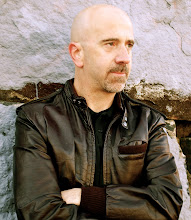
Judas Coyne is an aging heavy-metal rock god who seems to be the very cliche of the over-the-hill rock star, from the requisite dead band members, to his interest in the bizarre and the freakish, to his succession of doomed relationships with female groupies whose ages are getting farther and farther removed from his own.
Jude lives on a farm in upstate New York. His "career" now consists of writing and recording songs for his own benefit - hiding them away like he hides himself away, letting his personal assistant handle the minutiae of real life.
When his assistant mentions he's run across the opportunity online to purchase a dead man's ghost - by way of the corpse's suit - for a thousand dollars, Jude jumps at the chance. What else would he do? What else would his fans have expected him to do?
The suit arrives at Jude's door a few days later, and almost immediately, strange occurrences begin happening. Frightening visions. Trance-like states of hypnosis, with blackouts and worse. Then things move quickly from bad to worse, and before you know it, Jude and his girl - a flavor-of-the-month goth chick nicknamed "Georgia" - are running for their lives, trying to outdistance an angry spirit.
I'm not going to run down the plot any further, partly because so many other reviewers already have, and partly because by now you've already decided whether HEART-SHAPED BOX is your cup of tea or not. In some ways it's a very traditional ghost story and in others, not so much.
HEART-SHAPED BOX was originally published in 2007, and I never bothered reading it because, quite simply, I didn't give author Joe Hill a chance. The fact that he was Stephen King's son was supposed to be some kind of big secret, but it was about the worst-kept secret since, well, some other really badly kept secret.
I figured here was the classic example of a guy making money and gaining fame off his father's name, and the fact that he was writing under a different name made it somehow worse. More cynical and calculated, or something.
Boy, was that a mistake, and not just because it shows what a shallow asshole I can be at times.
Joe Hill can really write. He takes a story that's been told around a million campfires and lifts it above the commonplace and into something special, developing a gauzy, southern-gothic atmospheric tension when the story moves from New York State to Georgia, on to Florida, and finally ending in Coyne's boyhood home, a dilapidated farm in Louisiana.
While I resisted reading Joe Hill's work because of his family name, it seems almost comically ironic to note that HEART-SHAPED BOX contains much of the stuff that made me such a die-hard fan of Stephen King's early work, most notably 'SALEM'S LOT and THE SHINING:
- The ability to create characters we may not like but can't help rooting for, maybe because we see ourselves in these people who so often act out of self-interest and personal greed, but who - we hope - have the chance to redeem themselves in the end, perhaps because we hold out the same hope for ourselves.
- The ability to insert humor into the narrative in the unlikeliest places and at the unlikeliest times, without taking away from the suspense, and even, as impossible as it seems, enhancing it.
- The ability to draw the reader into the world he's created, so by the end of the book you're not just watching Judas Coyne and Mary Beth try to fight their way out of the mess they're in, you're right there with them, experiencing the horror that is the relentlessly vengeful Craddock McDermott and his smoke-blue pickup truck.
If you're smarter or more perceptive than I am, maybe you'll see where the book is going before it gets there, and if so, good for you. But I didn't see it coming, so when Hill wraps up the mystery of why Judas Coyne had been chosen - and he was chosen - for haunting, it's a satisfying resolution.
Of course, there's still the pesky question of how - and even whether -the aging rock star and his troubled, three-decades-younger girlfriend will survive, but if you haven't read the book yet, you're going to have to do so to get the answer to that one.
I owe you an apology, Joe Hill. I'm sure you don't care one way or the other, but I didn't give you a chance, and it was my loss missing out on one outstanding horror novel for six years.
Great book. If you love horror - not blood and guts and gore, but real psychological horror - and you haven't read HEART-SHAPED BOX yet, go get it. You won't be sorry.
Saturday, January 19, 2013


Tuesday, January 15, 2013
PARALLAX VIEW, Chapter Ten
My brand-new thriller, PARALLAX VIEW, is now available. I'm very excited about this book and will be posting several preview chapters over the course of the day. Here's Chapter Ten:
10
May 30, 1987
2:35 p.m.
Ramstein Air Base, West Germany
The back of the envelope was sweat-stained to a murky off-brown from being plastered to Tracie’s skin in the stifling heat of the East German dance club. The front, where was scrawled, “President Ronald Reagan,” by Mikhail Gorbachev, if her handler was to be believed—and Tracie believed him—remained undisturbed.
After fighting her way out of the dance club, Tracie had snuck out of East Berlin uneventfully—it was never a problem if you had the right contacts—and driven as fast as she dared back to Ramstein Air Base in West Germany in a waiting CIA-supplied automobile. By the time she arrived at Ramstein it was approaching six a.m., and she crashed, exhausted, in an empty apartment maintained just off the base by the CIA. After just a few short hours of sleep, she was awakened by telephone and advised her flight to Andrews Air Force Base in Maryland would be departing at eleven p.m.
Tracie showered and dressed, reveling in the luxury of a little time to herself and the added bonus of an unlimited hot water supply. In many of the locations she had worked as a CIA field operative there had been no water at all, much less hot water.
During her shower, Tracie placed Gorbachev’s envelope atop the ceramic toilet tank, less than four feet from where she stood soaping and rinsing. Her assignment had been to retrieve the letter, spirit it out of East Germany, and then accompany it to Washington, never allowing it out of her sight until its delivery to the President, and that was what she intended to do.
She had slept with the letter hugged to her chest, cradling it like a tiny baby. She slept fitfully, but then she always slept fitfully, awakened by the slightest hint of a sound, a disruption in the room’s air currents, a barely perceptible noise outside her window. Her supersensitive perception, even while asleep, had kept her alive in some of the most dangerous locations in the world.
Tracie had performed missions in Asian and Middle Eastern countries where being female meant you had no rights, possessed no intrinsic value other than what the men around you were willing to bestow upon you. You could disappear without warning at any time and for any reason, and no one would ever question why.
The United States government would be no help, either, as her missions were almost always off the books and so highly sensitive that if she was captured, rather than fighting or negotiating for her release, the government would deny her very presence in the country, all the way up the official channels.
This was the life of a CIA Directorate of Operations agent. It was Tracie Tanner’s life, and a career she had never once regretted undertaking. It was a solitary, often lonely life, but as the daughter of a four-star U.S. Army general and a career State Department diplomat, Tracie had been groomed for it. After graduating Brown University in Providence, Rhode Island, with a degree in linguistics, Tracie had been recruited into the ranks of the CIA. She had trained for three grueling years, initially at The Farm and then in the field, under a crusty old badass veteran of a quarter-century of covert operations whose real name she still did not know. Then she began working solo missions under her mentor and direct supervisor at CIA, Winston Andrews. Despite her inability to share even the broadest of details about her career with her parents, she knew they were proud of her decision to devote her life to the cause of freedom and service to her country.
But right now, all Tracie cared about was the steaming-hot water blasting out of the shower in the small apartment. She washed the sweat and grime of the mission off every inch of her body, then rinsed off and started again, scrubbing until she felt completely refreshed, regenerated and ready to begin the second half—the easy half—of the job. She would accompany Gorbachev’s letter to the White House, bypassing all official and diplomatic channels before hand-delivering it to its recipient, President Ronald Reagan.
The mission would end with an official debrief at Langley. Tracie hoped she might then be fortunate enough to wrangle a few days off to visit her folks in suburban Washington, but knew that was probably a pipe dream. Too many things were happening in too many hot spots around the world for the agency to allow one of their most valuable resources to hang out like a normal twenty-seven-year-old single woman.
In any event, the rest of the trip should be a cake walk. Tracie calculated the length of the flight and the time difference between West Germany and Washington, D.C. Eight hours in the air, more or less, and a six-hour time difference meant they would touch down at Andrews around 2:00 a.m. local time.
The 11:00 p.m. departure time was not exactly a typical flight schedule, but then Tracie had long ago adjusted to the unusual hours the job entailed. After being advised of the critical nature of the mission, the Air Force would have needed time to prep an airplane and get a flight crew together.
Tracie stepped directly under the shower nozzle, rinsing shampoo from her luxurious mane of red hair, enjoying the warmth of the water, always keeping one eye on the innocent-looking envelope propped against the wall on top of the toilet tank just outside the shower.
Finally, reluctantly, she twisted the faucets, sighing as the blast of water slowed to a trickle and then disappeared entirely. She stepped from the shower, dried off and dressed, and then quickly blow-dried her hair. With the extravagance of the hot shower out of the way, she wandered the apartment, the time passing slowly as she waited to leave Europe behind.
***
May 30, 1987
10:10 p.m.
Ramstein Air Base, West Germany
Tracie woke with a start and checked her watch. She had drifted off to sleep, stretched out on a small couch while watching a soccer match on the apartment’s black and white television, and now worried she may have missed her flight.
Ten-ten. Shit. She’d have to hurry, but would probably make it. If she timed it right, she might even manage coffee. Dinner she could take or leave, but the thought of departing Ramstein for a long flight to the States without an invigorating jolt of caffeine was unacceptable.
She threw her clothing into a small canvas bag—traveling light was second nature to Tracie Tanner after seven years of CIA service—and slid Mikhail Gorbachev’s letter carefully into the interior breast pocket of her light jacket. Then she rushed out of the apartment, jumped into her car, and drove onto the base.
She dumped the CIA car outside a small commissary adjacent to the airfield, hid the keys under the front seat, and hustled inside. She passed a pair of young airmen who made no attempt to hide their admiration of her running figure. She ignored them. They didn’t have coffee. Besides, she had long since gotten used to men staring at her. Also ogling her, leering at her and propositioning her.
Tracie checked her watch. Twenty-five minutes until her flight’s scheduled departure. She choked down her coffee. It was scalding hot and almost undrinkably strong, just the way she liked it. Then she grabbed her bag, checked for her precious cargo—the letter was still there—and then double-timed to the airfield. Someone would retrieve the car later.
Tracie had been instructed to check in at Hangar Three, and now she slowed her pace about a hundred feet from the door, walking onto the tarmac at precisely 10:55 p.m. Outside the hangar, a gigantic green U.S. Air Force B-52 towered above her, the eight-engine high-wing jet appearing almost impossibly large. It had to be close to two hundred feet from wingtip to wingtip, and the fuselage soared high above like some kind of fabricated metal dinosaur. The notion of the huge hunk of metal ever getting airborne, much less staying that way and flying all the way to the United States seemed outlandish, some kind of magic trick or optical illusion.
Tracie had logged endless hours aboard dozens of different aircraft, from medevac helicopters to Boeing 747’s, during her tenure as a CIA covert ops specialist, but had never been aboard a B-52. The sheer enormity of the aircraft was staggering. From where she stood, it looked like every other aircraft she had ever flown aboard could fit inside this behemoth. The wings thrusting outward from the top of the aircraft’s fuselage seemed to go on forever, swept back and hanging down slightly, as if the weight of the eight jet engines hanging in clusters of two was simply more than they could bear. The fuselage itself stretched off into the distance; to Tracie’s eye it appeared nearly as long as the wing span was wide.
She froze in place, marveling at the engineering miracle perched atop its tiny-looking wheels. She could feel her jaw hanging open and closed it, embarrassed. She felt like a country bumpkin on her first visit to the big city.
Standing directly in front of—and far below—the nose of the huge aircraft was an officer, probably late-thirties, handsome in a grizzled, seen-it-all way. He had obviously been awaiting her arrival, and he smiled at her reaction to the B-52. “May I see your ID, ma’am?” he asked.
Tracie handed it over, shaking her head in mute admiration of the aircraft.
The officer said, “We get that a lot from people who have never been up close to a BUFF before. It’s pretty impressive, isn’t it?”
“That’s an understatement,” Tracie answered.
The officer handed Tracie’s ID back and said, “I’m Major Stan Wilczynski, and I’ll be Pilot in Command for today’s flight. I’ll introduce you to the rest of the crew shortly.”
She returned the Major’s smile. “I’ll bite,” she said. “What’s ‘BUFF’?” Other than you, she wanted to add, wondering how long it had been since she had enjoyed any male companionship outside of official duty status and realizing she couldn’t remember. She kept her remark to herself, though, noting the Major’s wedding ring.
He chuckled. “BUFF’s our nickname for the B-52. Stands for ‘Big Ugly Fat Fuckers.’ And they are all of that, but these babies have served with distinction for a quarter-century, with plenty more years to come. Some say the new B-1 will make the BUFF obsolete, but I’ll believe it when I see it.”
Tracie nodded, noting the reverence in the pilot’s voice as he talked about the plane. “How long have you flown the B-52, Major?”
“It’s Stan to my friends, Miss Tanner. And I’ve been involved with these Big Ugly Fuckers almost since my first day in the Air Force. Sometimes it feels like I’ve spent my whole life inside one of these beasts. Can’t imagine a better way to serve my country, to be honest.”
Tracie grinned. The man’s enthusiasm was infectious, and went a long way toward breaking down her caution, a trait she came by naturally and one that had served her well over the course of her seven-year CIA career. But there was no need for it now; it was clear she was among friends.
“Anyway,” Wilczynki continued, “I’ve bored you long enough. I just can’t help bragging when the subject is my baby.” He gestured affectionately toward the aircraft’s nose. “Whaddaya say we climb aboard and get ready to leave this continent behind?” The Major turned and indicated a metal ladder hanging from an open hatch in the bottom of the aircraft.
“I’m not bored at all,” Tracie answered, starting up the ladder. “I love hearing a professional discuss his passion.”
Major Wilczynski paused. “You know, I’ve never really thought about it in those terms before, but you’re right, I do have a passion for these old birds.” He started up the ladder behind Tracie and they disappeared into the B-52.
10
May 30, 1987
2:35 p.m.
Ramstein Air Base, West Germany
The back of the envelope was sweat-stained to a murky off-brown from being plastered to Tracie’s skin in the stifling heat of the East German dance club. The front, where was scrawled, “President Ronald Reagan,” by Mikhail Gorbachev, if her handler was to be believed—and Tracie believed him—remained undisturbed.
After fighting her way out of the dance club, Tracie had snuck out of East Berlin uneventfully—it was never a problem if you had the right contacts—and driven as fast as she dared back to Ramstein Air Base in West Germany in a waiting CIA-supplied automobile. By the time she arrived at Ramstein it was approaching six a.m., and she crashed, exhausted, in an empty apartment maintained just off the base by the CIA. After just a few short hours of sleep, she was awakened by telephone and advised her flight to Andrews Air Force Base in Maryland would be departing at eleven p.m.
Tracie showered and dressed, reveling in the luxury of a little time to herself and the added bonus of an unlimited hot water supply. In many of the locations she had worked as a CIA field operative there had been no water at all, much less hot water.
During her shower, Tracie placed Gorbachev’s envelope atop the ceramic toilet tank, less than four feet from where she stood soaping and rinsing. Her assignment had been to retrieve the letter, spirit it out of East Germany, and then accompany it to Washington, never allowing it out of her sight until its delivery to the President, and that was what she intended to do.
She had slept with the letter hugged to her chest, cradling it like a tiny baby. She slept fitfully, but then she always slept fitfully, awakened by the slightest hint of a sound, a disruption in the room’s air currents, a barely perceptible noise outside her window. Her supersensitive perception, even while asleep, had kept her alive in some of the most dangerous locations in the world.
Tracie had performed missions in Asian and Middle Eastern countries where being female meant you had no rights, possessed no intrinsic value other than what the men around you were willing to bestow upon you. You could disappear without warning at any time and for any reason, and no one would ever question why.
The United States government would be no help, either, as her missions were almost always off the books and so highly sensitive that if she was captured, rather than fighting or negotiating for her release, the government would deny her very presence in the country, all the way up the official channels.
This was the life of a CIA Directorate of Operations agent. It was Tracie Tanner’s life, and a career she had never once regretted undertaking. It was a solitary, often lonely life, but as the daughter of a four-star U.S. Army general and a career State Department diplomat, Tracie had been groomed for it. After graduating Brown University in Providence, Rhode Island, with a degree in linguistics, Tracie had been recruited into the ranks of the CIA. She had trained for three grueling years, initially at The Farm and then in the field, under a crusty old badass veteran of a quarter-century of covert operations whose real name she still did not know. Then she began working solo missions under her mentor and direct supervisor at CIA, Winston Andrews. Despite her inability to share even the broadest of details about her career with her parents, she knew they were proud of her decision to devote her life to the cause of freedom and service to her country.
But right now, all Tracie cared about was the steaming-hot water blasting out of the shower in the small apartment. She washed the sweat and grime of the mission off every inch of her body, then rinsed off and started again, scrubbing until she felt completely refreshed, regenerated and ready to begin the second half—the easy half—of the job. She would accompany Gorbachev’s letter to the White House, bypassing all official and diplomatic channels before hand-delivering it to its recipient, President Ronald Reagan.
The mission would end with an official debrief at Langley. Tracie hoped she might then be fortunate enough to wrangle a few days off to visit her folks in suburban Washington, but knew that was probably a pipe dream. Too many things were happening in too many hot spots around the world for the agency to allow one of their most valuable resources to hang out like a normal twenty-seven-year-old single woman.
In any event, the rest of the trip should be a cake walk. Tracie calculated the length of the flight and the time difference between West Germany and Washington, D.C. Eight hours in the air, more or less, and a six-hour time difference meant they would touch down at Andrews around 2:00 a.m. local time.
The 11:00 p.m. departure time was not exactly a typical flight schedule, but then Tracie had long ago adjusted to the unusual hours the job entailed. After being advised of the critical nature of the mission, the Air Force would have needed time to prep an airplane and get a flight crew together.
Tracie stepped directly under the shower nozzle, rinsing shampoo from her luxurious mane of red hair, enjoying the warmth of the water, always keeping one eye on the innocent-looking envelope propped against the wall on top of the toilet tank just outside the shower.
Finally, reluctantly, she twisted the faucets, sighing as the blast of water slowed to a trickle and then disappeared entirely. She stepped from the shower, dried off and dressed, and then quickly blow-dried her hair. With the extravagance of the hot shower out of the way, she wandered the apartment, the time passing slowly as she waited to leave Europe behind.
***
May 30, 1987
10:10 p.m.
Ramstein Air Base, West Germany
Tracie woke with a start and checked her watch. She had drifted off to sleep, stretched out on a small couch while watching a soccer match on the apartment’s black and white television, and now worried she may have missed her flight.
Ten-ten. Shit. She’d have to hurry, but would probably make it. If she timed it right, she might even manage coffee. Dinner she could take or leave, but the thought of departing Ramstein for a long flight to the States without an invigorating jolt of caffeine was unacceptable.
She threw her clothing into a small canvas bag—traveling light was second nature to Tracie Tanner after seven years of CIA service—and slid Mikhail Gorbachev’s letter carefully into the interior breast pocket of her light jacket. Then she rushed out of the apartment, jumped into her car, and drove onto the base.
She dumped the CIA car outside a small commissary adjacent to the airfield, hid the keys under the front seat, and hustled inside. She passed a pair of young airmen who made no attempt to hide their admiration of her running figure. She ignored them. They didn’t have coffee. Besides, she had long since gotten used to men staring at her. Also ogling her, leering at her and propositioning her.
Tracie checked her watch. Twenty-five minutes until her flight’s scheduled departure. She choked down her coffee. It was scalding hot and almost undrinkably strong, just the way she liked it. Then she grabbed her bag, checked for her precious cargo—the letter was still there—and then double-timed to the airfield. Someone would retrieve the car later.
Tracie had been instructed to check in at Hangar Three, and now she slowed her pace about a hundred feet from the door, walking onto the tarmac at precisely 10:55 p.m. Outside the hangar, a gigantic green U.S. Air Force B-52 towered above her, the eight-engine high-wing jet appearing almost impossibly large. It had to be close to two hundred feet from wingtip to wingtip, and the fuselage soared high above like some kind of fabricated metal dinosaur. The notion of the huge hunk of metal ever getting airborne, much less staying that way and flying all the way to the United States seemed outlandish, some kind of magic trick or optical illusion.
Tracie had logged endless hours aboard dozens of different aircraft, from medevac helicopters to Boeing 747’s, during her tenure as a CIA covert ops specialist, but had never been aboard a B-52. The sheer enormity of the aircraft was staggering. From where she stood, it looked like every other aircraft she had ever flown aboard could fit inside this behemoth. The wings thrusting outward from the top of the aircraft’s fuselage seemed to go on forever, swept back and hanging down slightly, as if the weight of the eight jet engines hanging in clusters of two was simply more than they could bear. The fuselage itself stretched off into the distance; to Tracie’s eye it appeared nearly as long as the wing span was wide.
She froze in place, marveling at the engineering miracle perched atop its tiny-looking wheels. She could feel her jaw hanging open and closed it, embarrassed. She felt like a country bumpkin on her first visit to the big city.
Standing directly in front of—and far below—the nose of the huge aircraft was an officer, probably late-thirties, handsome in a grizzled, seen-it-all way. He had obviously been awaiting her arrival, and he smiled at her reaction to the B-52. “May I see your ID, ma’am?” he asked.
Tracie handed it over, shaking her head in mute admiration of the aircraft.
The officer said, “We get that a lot from people who have never been up close to a BUFF before. It’s pretty impressive, isn’t it?”
“That’s an understatement,” Tracie answered.
The officer handed Tracie’s ID back and said, “I’m Major Stan Wilczynski, and I’ll be Pilot in Command for today’s flight. I’ll introduce you to the rest of the crew shortly.”
She returned the Major’s smile. “I’ll bite,” she said. “What’s ‘BUFF’?” Other than you, she wanted to add, wondering how long it had been since she had enjoyed any male companionship outside of official duty status and realizing she couldn’t remember. She kept her remark to herself, though, noting the Major’s wedding ring.
He chuckled. “BUFF’s our nickname for the B-52. Stands for ‘Big Ugly Fat Fuckers.’ And they are all of that, but these babies have served with distinction for a quarter-century, with plenty more years to come. Some say the new B-1 will make the BUFF obsolete, but I’ll believe it when I see it.”
Tracie nodded, noting the reverence in the pilot’s voice as he talked about the plane. “How long have you flown the B-52, Major?”
“It’s Stan to my friends, Miss Tanner. And I’ve been involved with these Big Ugly Fuckers almost since my first day in the Air Force. Sometimes it feels like I’ve spent my whole life inside one of these beasts. Can’t imagine a better way to serve my country, to be honest.”
Tracie grinned. The man’s enthusiasm was infectious, and went a long way toward breaking down her caution, a trait she came by naturally and one that had served her well over the course of her seven-year CIA career. But there was no need for it now; it was clear she was among friends.
“Anyway,” Wilczynki continued, “I’ve bored you long enough. I just can’t help bragging when the subject is my baby.” He gestured affectionately toward the aircraft’s nose. “Whaddaya say we climb aboard and get ready to leave this continent behind?” The Major turned and indicated a metal ladder hanging from an open hatch in the bottom of the aircraft.
“I’m not bored at all,” Tracie answered, starting up the ladder. “I love hearing a professional discuss his passion.”
Major Wilczynski paused. “You know, I’ve never really thought about it in those terms before, but you’re right, I do have a passion for these old birds.” He started up the ladder behind Tracie and they disappeared into the B-52.
PARALLAX VIEW, Chapter Nine
My brand-new thriller, PARALLAX VIEW, is now available. I'm very excited about this book and will be posting several preview chapters over the course of the day. Here's Chapter Nine:
9
May 30, 1987
12:15 a.m.
Ramstein Air Force Base, West Germany
“Hello?”
“Is this Mitchell?”
“Who wants to know?”
“Kopalev.”
“Yes, it’s Mitchell.”
“You are alone, yes? You can speak freely?”
“Yes.”
“Good. Because we have an assignment for you. An item has been taken out of Russia through the GDR and is being flown to the United States from your air base.”
“So? Stuff flies out of here to the States all the time.”
“Not ‘stuff’ like this. It is critical this item not reach its intended destination. You will ensure that it does not.”
“What is the item?”
“An envelope addressed to your President Reagan. We believe the envelope contains a handwritten letter from Mikhail Gorbachev betraying his country.”
“I’m supposed to intercept a letter? In one small envelope? I don’t know anything about mail delivery. It’s not possible.”
“It is possible, Major. And it will be done. We have been paying you good money for many years and you have provided little return on our investment. Now it is time for you to earn those tens of thousands of American dollars we have deposited into your bank account.”
“But…how?”
“This item is far too valuable to be left unguarded. It will be placed on the first available military flight leaving Ramstein and will be carried personally by a member of your CIA. We believe that representative will be a young woman, red-haired and beautiful.”
“A beautiful, red-haired CIA spook?”
“That is correct. We have two witnesses who saw such a young woman execute one of our men in cold blood. We are certain she is in possession of the item. The airplane she boards for the United States is the airplane the envelope will be on. You will ensure that plane never arrives at its destination.”
“Crash a U.S Air Force jet? Are you out of your mind? Why can’t I just steal the letter and deliver it to you through a contact?”
“You propose stealing a Top-Secret document from a CIA professional? It would never happen. You would be dead before you got within three feet of her.”
“But if I can?”
“You do not understand. This item could conceivably change the entire balance of world power. It is imperative it be destroyed. We cannot risk you being caught trying to steal it. You will crash the airplane and thus destroy the letter. Those are your orders. They will be followed. Period.”
I already told you, it’s impossible. It can’t be done!”
“You will find a way, Major.”
“You’re a fucking crackpot. Forget it. I’m out. Find someone else to do your dirty work.”
“Major, you will never guess the report I received today.”
“Report? What are you talking about?”
“One of our operatives followed Roberta as she drove little Sarah to dance class this afternoon. He tells me, Major, that your young daughter is getting quite beautiful. Growing like a weed, as you Americans like to say.”
“He what? Roberta and Sarah? Listen here, you psychotic bastard, you leave my family out of this, do you understand?”
“The roads, Major, they are so dangerous in your country. Automobile accidents are a daily occurrence, often fiery crashes where the victims, sometimes mothers with their young children in the back seat, they crash their cars and burn to death in the fiery aftermath. They may survive the initial accident but then literally cook to death inside the burning vehicle. So sad, Major. So painful for the victims. So avoidable.”
Silence.
“Are you still with me, Major? Are you paying attention?”
“I’m here, you sick son of a bitch.”
“Good. You will ensure the airplane carrying the item of which we spoke never reaches your country. If you do not accomplish this assignment, well, let us just say I hope you have many photographs of your beautiful little family to keep their memory alive. Do not think about alerting the authorities, either. We will get to your wife and child if you do. Please believe that. Do you believe that, Major?”
Silence.
“Do you believe that, Major?”
“Yes. I believe that.”
“Then get going. You have a lot of work to do and very little time. The item is either already on the base or will be soon. It won’t be long before the plane carrying it will be lifting off, likely with the CIA operative as the sole passenger.”
“God damn you.”
“Oh, and Major? One more thing.”
“What?”
“Good luck. And goodbye.”
9
May 30, 1987
12:15 a.m.
Ramstein Air Force Base, West Germany
“Hello?”
“Is this Mitchell?”
“Who wants to know?”
“Kopalev.”
“Yes, it’s Mitchell.”
“You are alone, yes? You can speak freely?”
“Yes.”
“Good. Because we have an assignment for you. An item has been taken out of Russia through the GDR and is being flown to the United States from your air base.”
“So? Stuff flies out of here to the States all the time.”
“Not ‘stuff’ like this. It is critical this item not reach its intended destination. You will ensure that it does not.”
“What is the item?”
“An envelope addressed to your President Reagan. We believe the envelope contains a handwritten letter from Mikhail Gorbachev betraying his country.”
“I’m supposed to intercept a letter? In one small envelope? I don’t know anything about mail delivery. It’s not possible.”
“It is possible, Major. And it will be done. We have been paying you good money for many years and you have provided little return on our investment. Now it is time for you to earn those tens of thousands of American dollars we have deposited into your bank account.”
“But…how?”
“This item is far too valuable to be left unguarded. It will be placed on the first available military flight leaving Ramstein and will be carried personally by a member of your CIA. We believe that representative will be a young woman, red-haired and beautiful.”
“A beautiful, red-haired CIA spook?”
“That is correct. We have two witnesses who saw such a young woman execute one of our men in cold blood. We are certain she is in possession of the item. The airplane she boards for the United States is the airplane the envelope will be on. You will ensure that plane never arrives at its destination.”
“Crash a U.S Air Force jet? Are you out of your mind? Why can’t I just steal the letter and deliver it to you through a contact?”
“You propose stealing a Top-Secret document from a CIA professional? It would never happen. You would be dead before you got within three feet of her.”
“But if I can?”
“You do not understand. This item could conceivably change the entire balance of world power. It is imperative it be destroyed. We cannot risk you being caught trying to steal it. You will crash the airplane and thus destroy the letter. Those are your orders. They will be followed. Period.”
I already told you, it’s impossible. It can’t be done!”
“You will find a way, Major.”
“You’re a fucking crackpot. Forget it. I’m out. Find someone else to do your dirty work.”
“Major, you will never guess the report I received today.”
“Report? What are you talking about?”
“One of our operatives followed Roberta as she drove little Sarah to dance class this afternoon. He tells me, Major, that your young daughter is getting quite beautiful. Growing like a weed, as you Americans like to say.”
“He what? Roberta and Sarah? Listen here, you psychotic bastard, you leave my family out of this, do you understand?”
“The roads, Major, they are so dangerous in your country. Automobile accidents are a daily occurrence, often fiery crashes where the victims, sometimes mothers with their young children in the back seat, they crash their cars and burn to death in the fiery aftermath. They may survive the initial accident but then literally cook to death inside the burning vehicle. So sad, Major. So painful for the victims. So avoidable.”
Silence.
“Are you still with me, Major? Are you paying attention?”
“I’m here, you sick son of a bitch.”
“Good. You will ensure the airplane carrying the item of which we spoke never reaches your country. If you do not accomplish this assignment, well, let us just say I hope you have many photographs of your beautiful little family to keep their memory alive. Do not think about alerting the authorities, either. We will get to your wife and child if you do. Please believe that. Do you believe that, Major?”
Silence.
“Do you believe that, Major?”
“Yes. I believe that.”
“Then get going. You have a lot of work to do and very little time. The item is either already on the base or will be soon. It won’t be long before the plane carrying it will be lifting off, likely with the CIA operative as the sole passenger.”
“God damn you.”
“Oh, and Major? One more thing.”
“What?”
“Good luck. And goodbye.”
PARALLAX VIEW, Chapter Eight
My brand-new thriller, PARALLAX VIEW, is now available. I'm very excited about this book and will be posting several preview chapters over the course of the day. Here's Chapter Eight:
8
May 30, 1987
Time Unknown
Location unknown
Aleksander regained consciousness slowly. He was sitting on a hard chair, probably in a basement or storage room of some sort. It was cold and dark and damp and smelled of rotting vegetables and something vaguely sinister. Copper? Aleksander wasn’t sure.
He could hear voices muttering somewhere nearby. Two people, it seemed. He was afraid to open his eyes to check. His hands and arms ached. He tried moving them but they were secured tight to the chair, arms pulled behind his back, wrists shackled together.
Tried his feet next. Same result. Each ankle had been affixed to a chair leg with something heavy and solid, probably a length of chain.
Aleksander felt queasy and weak. He knew he had been drugged into unconsciousness inside the tiny East German automobile and wondered how long he had been out. Was he even still in the German Democratic Republic? Was he back in Russia? Somewhere else? He concentrated on the voices, trying to pick up enough of the conversation to determine what language they were speaking and how many people were inside the room with him.
No luck. The voices were too quiet.
He risked opening his eyes, just a sliver, and moved his head very slowly to look around. In the dirty yellow light of a single bulb he could see a pair of shadowy figures huddled together in a corner of the room. The image blurred and doubled, then cleared. The lingering effects of whatever drugs he had been given, Aleksander guessed.
The men were sitting around a rickety table drinking something hot out of mugs—Aleksander could see the steam rising into the air even from here—and his stomach clenched and rumbled.
He wondered how long it had been since he had eaten. He wondered whether he would ever eat again. The terror of his predicament struck him like a wrecking ball and Aleksander puked all over the floor, the vomit burning his gullet on the way out. Cheap German vodka. Aleksander sobbed, then quickly stopped himself. His eyes widened in mounting panic as the men pushed their chairs back and began walking across the room.
The men stopped directly in front of him. One was tall and thin, skeletal. The other was completely bald. Aleksander looked up in fear, feeling like he might be sick again. He hoped when the vomit erupted from him it wouldn’t splatter all over his captors.
“Welcome back to the land of the living, Comrade,” the bald man said in Russian, which meant nothing, since his East German contact had spoken Russian, too. “Time is of the essence, so let us skip the preliminaries and get right down to business, shall we?”
Aleksander’s terror was nearly overwhelming. His stomach rolled and yawed. He was afraid to speak for fear of vomiting again.
But as terrifying as this situation was, he knew he possessed the ultimate trump card—provided he had been kidnapped by Russians. If these two weren’t citizens of the USSR, he didn’t know what he was going to do.
“Where is it?” the bald man said. So far skeleton-man had not spoken.
Aleksander had no choice but to answer now. He hoped he wouldn’t puke on the men, but they were standing perilously close. He swallowed hard. “Where is what?” he croaked. He hadn’t realized how thirsty he was until just now.
“Do not play games with us. Doing so will only cause you pain,” the bald man said, and skeleton-man drew back his foot and kicked Aleksander in the shin, hard, with his steel-toed boot. The pain exploded, racing up and down Aleksander’s leg like an electrical current.
He screamed in agony and fell forward, desperate to cover up, to protect his injured shin, but could barely move with his wrists shackled to the chair behind his back. He hadn’t heard anything crack but couldn’t believe the bone hadn’t shattered.
“Where is it?” the bald man repeated, his voice slashing like a knife.
“I don’t know,” Aleksander gasped. “I passed it along just as I was instructed to do. Where he went with it after he left the club I have no idea.”
“You know him,” the man said. It was not a question. “You have done business with him in the past.”
“No, never. I swear. I’ve never seen him before.”
“You were laughing and joking like old friends, Comrade Petrovka. Do not insult our intelligence.”
“I was just doing what I was told to do by my contact, to blend in, that’s all. I’ve haven’t been to East Germany since I was a teen, I swear. You can check my travel records if you don’t believe me.”
“Oh, we will, don’t worry about that. Next question: What was the item you delivered?”
“I don’t know.”
“I don’t believe you, traitor.”
“Traitor?” Aleksander looked up at his tormentors, sweat dripping into his eyes. His shin throbbed with every beat of his heart. He knew now was the time to play his trump card. It might be his only chance. “No,” he said, “I am not a traitor. I was doing exactly as ordered by General Secretary Gorbachev. I am here on official state business.”
“Official state business?” the man said, his voice mocking and cruel. He turned to his partner. “Did you hear that, Vasily? He is here on official state business, representing Secretary Gorbachev himself.”
The man turned his attention back to Aleksander. “Well, I have news for you, Comrade Aleksander Petrovka of Ivanteyevka. Mikhail Gorbachev is just as much a traitor to his homeland as you are. We care nothing for Mikhail Gorbachev’s orders. If Gorbachev’s reckless stupidity is not checked, he will be the downfall of the Soviet Empire, and Vasily and I are just two of many who refuse to see that happen.
“Betraying your country under the orders of a fellow traitor is no excuse, Comrade Petrovka. So I ask you again, for the last time: what was the item you delivered to your contact?”
Terror flooded through Aleksander’s body. The terror overwhelmed the pain so his throbbing shin did not even exist. The terror overwhelmed his queasy stomach so he no longer felt he was about to puke. The terror was everything.
These men were Russians, but it did not matter. They were Russians, but the word of Mikhail Gorbachev meant nothing to them. They were accusing him of treason, but they were traitors. The irony struck him like another kick to the shin. Aleksander realized he was breathing heavily, forcing air in and out through his mouth like a panting dog. He was hyperventilating but could not stop himself.
This was bad. This was worse than bad. This was a nightmare come to life.
“WHAT WAS THE ITEM YOU DELIVERED TO YOUR CONTACT?” the bald man screamed in Aleksander’s face. Spittle sprayed out of the man’s mouth as if from a fire hose. A fat gob of saliva splattered the side of Aleksander’s nose and dripped slowly into his mouth.
Aleksander sobbed, “I don’t know! Secretary Gorbachev gave me a sealed envelope. Inside was some kind of document, I don’t know what. He forbade me to look at it.”
His tormentor stepped back and looked at his comrade. He seemed genuinely shocked. “You risked your life to deliver a document and . . . you don’t even know what it was?”
Aleksander hung his head and shook it miserably. He would never see Tatiana or his children again. He would never see the sun rise over the eastern edge of the Moscow skyline. He was going to die here in this dirty, dark torture chamber at the hands of two people he had never seen, two people who believed him a traitor to his country. And there was nothing he could do about it.
A wrenching sob shook his body and pain flared in his shin. “The envelope was sealed. I could not have opened it even if I wanted to.”
His two captors laughed as though he had said something funny. Then his interrogator switched gears. “Your contact, he was a German, was he not?”
“Yes, that is what Secretary Gorbachev told me, and I don’t know why he would lie about it.”
The two men grunted and his interrogator spit on the floor. “Yes, why would he lie?” the bald man said. “He is destroying his ancestral homeland, the land Russians have spilled blood to protect for generations, but surely he would not lie.
“Now, getting back to the document the traitor Gorbachev asked you to pass along to this German, what was it?”
“I already told you, I don’t know.”
The man waved his hand like he was brushing a fly away from his face. “Don’t take me for a fool, please, Comrade. There is no one alive who would not look inside the envelope the first chance he got. What was it?”
Aleksander raised his head and looked at the man beseechingly, but said nothing. What could he say? It was clear another denial would be ignored.
And then, out of nowhere, inspiration. His contact! “If you were watching me, you must have been watching my contact, too,” he said, speaking quickly, enthusiastically. “If you can find him, you can take the envelope away from him and see for yourselves what it contains.”
“Thank you for your very helpful advice,” his tormentor replied with exaggerated politeness. “Your German collaborator claims to know nothing as well, and he passed the envelope off before we were able to intercept him.” The man shook his head in disgust and spit again on the floor. “We are getting nowhere and time is passing quickly.”
He smiled at Aleksander, his lips a thin bloodless slash. “I would like to say I am sorry for what is to come next, but, alas, I cannot. I have little patience for traitors, but would have gladly ended you quickly had you only given me the information I require. Now, I am afraid you are in for a rather unpleasant little while. I can’t be more specific because, you see, I don’t know how long it will take you to die. One can never predict these things, but the time will probably seem much longer to you than it actually is.”
The other man walked away and began dragging equipment across the concrete floor, placing it next to Aleksander’s chair. He didn’t seem sorry, either. He whistled a tuneless ditty as he expertly clamped a set of booster cables to a series of automobile batteries stacked atop a wooden pallet on wheels. A cable ran from the batteries to a small box fitted with dials, switches and a couple of grimy meters. To Aleksander the box resembled the transformer from the small electric train set he and Tatiana had given his son, Aleksander Junior, for his fourth birthday last year. It had taken months to save up enough money to buy the toy, but the look on his son’s face when he opened his gift had been worth every bit of sacrifice.
Tears spilled down Aleksander’s cheek at the memory and mixed with the spittle drying on his face. The quiet man continued working and whistling. Two cables extended from one side of the transformer-like box, snaking across the floor, terminating at Aleksander’s shackled feet. At the end of each of the cables was a shiny copper connector, spring-loaded and fitted with sharp teeth. A feeling of dread wormed its way through Aleksander’s gut and he no longer suspected he was going to throw up again, he knew it.
The quiet man unbuckled Aleksander’s belt and pulled it completely free of his trousers. He unsnapped the pants and unzipped the fly and motioned impatiently for Aleksander to lift his ass off the seat. Numbly, Aleksander did as he was instructed, and the man yanked his trousers and underwear down to his ankles.
Aleksander puked, barfing up the acidy-tasting remnants of the East German vodka, not caring this time that it splattered all over the quiet man. He began babbling, begging for his life.
The quiet man continued, unaffected. He attached the copper ends of the two cables to Aleksander’s bare scrotum, tugging lightly on each one to ensure it was fastened securely. Then he walked behind Aleksander’s chair, returning seconds later with a bucket of foul-looking water. He splashed some on Aleksander and on the cables.
He looked at Aleksander, his eyes hard and remorseless. “Goodbye, Comrade,” he said. They were the first and last words Aleksander ever heard him say. Then he walked to the small table on wheels upon which the transformer-like box was placed, and he flipped a switch. Then he turned a dial. Then Aleksander’s situation changed for the worse.
It took a long time for him to die.
8
May 30, 1987
Time Unknown
Location unknown
Aleksander regained consciousness slowly. He was sitting on a hard chair, probably in a basement or storage room of some sort. It was cold and dark and damp and smelled of rotting vegetables and something vaguely sinister. Copper? Aleksander wasn’t sure.
He could hear voices muttering somewhere nearby. Two people, it seemed. He was afraid to open his eyes to check. His hands and arms ached. He tried moving them but they were secured tight to the chair, arms pulled behind his back, wrists shackled together.
Tried his feet next. Same result. Each ankle had been affixed to a chair leg with something heavy and solid, probably a length of chain.
Aleksander felt queasy and weak. He knew he had been drugged into unconsciousness inside the tiny East German automobile and wondered how long he had been out. Was he even still in the German Democratic Republic? Was he back in Russia? Somewhere else? He concentrated on the voices, trying to pick up enough of the conversation to determine what language they were speaking and how many people were inside the room with him.
No luck. The voices were too quiet.
He risked opening his eyes, just a sliver, and moved his head very slowly to look around. In the dirty yellow light of a single bulb he could see a pair of shadowy figures huddled together in a corner of the room. The image blurred and doubled, then cleared. The lingering effects of whatever drugs he had been given, Aleksander guessed.
The men were sitting around a rickety table drinking something hot out of mugs—Aleksander could see the steam rising into the air even from here—and his stomach clenched and rumbled.
He wondered how long it had been since he had eaten. He wondered whether he would ever eat again. The terror of his predicament struck him like a wrecking ball and Aleksander puked all over the floor, the vomit burning his gullet on the way out. Cheap German vodka. Aleksander sobbed, then quickly stopped himself. His eyes widened in mounting panic as the men pushed their chairs back and began walking across the room.
The men stopped directly in front of him. One was tall and thin, skeletal. The other was completely bald. Aleksander looked up in fear, feeling like he might be sick again. He hoped when the vomit erupted from him it wouldn’t splatter all over his captors.
“Welcome back to the land of the living, Comrade,” the bald man said in Russian, which meant nothing, since his East German contact had spoken Russian, too. “Time is of the essence, so let us skip the preliminaries and get right down to business, shall we?”
Aleksander’s terror was nearly overwhelming. His stomach rolled and yawed. He was afraid to speak for fear of vomiting again.
But as terrifying as this situation was, he knew he possessed the ultimate trump card—provided he had been kidnapped by Russians. If these two weren’t citizens of the USSR, he didn’t know what he was going to do.
“Where is it?” the bald man said. So far skeleton-man had not spoken.
Aleksander had no choice but to answer now. He hoped he wouldn’t puke on the men, but they were standing perilously close. He swallowed hard. “Where is what?” he croaked. He hadn’t realized how thirsty he was until just now.
“Do not play games with us. Doing so will only cause you pain,” the bald man said, and skeleton-man drew back his foot and kicked Aleksander in the shin, hard, with his steel-toed boot. The pain exploded, racing up and down Aleksander’s leg like an electrical current.
He screamed in agony and fell forward, desperate to cover up, to protect his injured shin, but could barely move with his wrists shackled to the chair behind his back. He hadn’t heard anything crack but couldn’t believe the bone hadn’t shattered.
“Where is it?” the bald man repeated, his voice slashing like a knife.
“I don’t know,” Aleksander gasped. “I passed it along just as I was instructed to do. Where he went with it after he left the club I have no idea.”
“You know him,” the man said. It was not a question. “You have done business with him in the past.”
“No, never. I swear. I’ve never seen him before.”
“You were laughing and joking like old friends, Comrade Petrovka. Do not insult our intelligence.”
“I was just doing what I was told to do by my contact, to blend in, that’s all. I’ve haven’t been to East Germany since I was a teen, I swear. You can check my travel records if you don’t believe me.”
“Oh, we will, don’t worry about that. Next question: What was the item you delivered?”
“I don’t know.”
“I don’t believe you, traitor.”
“Traitor?” Aleksander looked up at his tormentors, sweat dripping into his eyes. His shin throbbed with every beat of his heart. He knew now was the time to play his trump card. It might be his only chance. “No,” he said, “I am not a traitor. I was doing exactly as ordered by General Secretary Gorbachev. I am here on official state business.”
“Official state business?” the man said, his voice mocking and cruel. He turned to his partner. “Did you hear that, Vasily? He is here on official state business, representing Secretary Gorbachev himself.”
The man turned his attention back to Aleksander. “Well, I have news for you, Comrade Aleksander Petrovka of Ivanteyevka. Mikhail Gorbachev is just as much a traitor to his homeland as you are. We care nothing for Mikhail Gorbachev’s orders. If Gorbachev’s reckless stupidity is not checked, he will be the downfall of the Soviet Empire, and Vasily and I are just two of many who refuse to see that happen.
“Betraying your country under the orders of a fellow traitor is no excuse, Comrade Petrovka. So I ask you again, for the last time: what was the item you delivered to your contact?”
Terror flooded through Aleksander’s body. The terror overwhelmed the pain so his throbbing shin did not even exist. The terror overwhelmed his queasy stomach so he no longer felt he was about to puke. The terror was everything.
These men were Russians, but it did not matter. They were Russians, but the word of Mikhail Gorbachev meant nothing to them. They were accusing him of treason, but they were traitors. The irony struck him like another kick to the shin. Aleksander realized he was breathing heavily, forcing air in and out through his mouth like a panting dog. He was hyperventilating but could not stop himself.
This was bad. This was worse than bad. This was a nightmare come to life.
“WHAT WAS THE ITEM YOU DELIVERED TO YOUR CONTACT?” the bald man screamed in Aleksander’s face. Spittle sprayed out of the man’s mouth as if from a fire hose. A fat gob of saliva splattered the side of Aleksander’s nose and dripped slowly into his mouth.
Aleksander sobbed, “I don’t know! Secretary Gorbachev gave me a sealed envelope. Inside was some kind of document, I don’t know what. He forbade me to look at it.”
His tormentor stepped back and looked at his comrade. He seemed genuinely shocked. “You risked your life to deliver a document and . . . you don’t even know what it was?”
Aleksander hung his head and shook it miserably. He would never see Tatiana or his children again. He would never see the sun rise over the eastern edge of the Moscow skyline. He was going to die here in this dirty, dark torture chamber at the hands of two people he had never seen, two people who believed him a traitor to his country. And there was nothing he could do about it.
A wrenching sob shook his body and pain flared in his shin. “The envelope was sealed. I could not have opened it even if I wanted to.”
His two captors laughed as though he had said something funny. Then his interrogator switched gears. “Your contact, he was a German, was he not?”
“Yes, that is what Secretary Gorbachev told me, and I don’t know why he would lie about it.”
The two men grunted and his interrogator spit on the floor. “Yes, why would he lie?” the bald man said. “He is destroying his ancestral homeland, the land Russians have spilled blood to protect for generations, but surely he would not lie.
“Now, getting back to the document the traitor Gorbachev asked you to pass along to this German, what was it?”
“I already told you, I don’t know.”
The man waved his hand like he was brushing a fly away from his face. “Don’t take me for a fool, please, Comrade. There is no one alive who would not look inside the envelope the first chance he got. What was it?”
Aleksander raised his head and looked at the man beseechingly, but said nothing. What could he say? It was clear another denial would be ignored.
And then, out of nowhere, inspiration. His contact! “If you were watching me, you must have been watching my contact, too,” he said, speaking quickly, enthusiastically. “If you can find him, you can take the envelope away from him and see for yourselves what it contains.”
“Thank you for your very helpful advice,” his tormentor replied with exaggerated politeness. “Your German collaborator claims to know nothing as well, and he passed the envelope off before we were able to intercept him.” The man shook his head in disgust and spit again on the floor. “We are getting nowhere and time is passing quickly.”
He smiled at Aleksander, his lips a thin bloodless slash. “I would like to say I am sorry for what is to come next, but, alas, I cannot. I have little patience for traitors, but would have gladly ended you quickly had you only given me the information I require. Now, I am afraid you are in for a rather unpleasant little while. I can’t be more specific because, you see, I don’t know how long it will take you to die. One can never predict these things, but the time will probably seem much longer to you than it actually is.”
The other man walked away and began dragging equipment across the concrete floor, placing it next to Aleksander’s chair. He didn’t seem sorry, either. He whistled a tuneless ditty as he expertly clamped a set of booster cables to a series of automobile batteries stacked atop a wooden pallet on wheels. A cable ran from the batteries to a small box fitted with dials, switches and a couple of grimy meters. To Aleksander the box resembled the transformer from the small electric train set he and Tatiana had given his son, Aleksander Junior, for his fourth birthday last year. It had taken months to save up enough money to buy the toy, but the look on his son’s face when he opened his gift had been worth every bit of sacrifice.
Tears spilled down Aleksander’s cheek at the memory and mixed with the spittle drying on his face. The quiet man continued working and whistling. Two cables extended from one side of the transformer-like box, snaking across the floor, terminating at Aleksander’s shackled feet. At the end of each of the cables was a shiny copper connector, spring-loaded and fitted with sharp teeth. A feeling of dread wormed its way through Aleksander’s gut and he no longer suspected he was going to throw up again, he knew it.
The quiet man unbuckled Aleksander’s belt and pulled it completely free of his trousers. He unsnapped the pants and unzipped the fly and motioned impatiently for Aleksander to lift his ass off the seat. Numbly, Aleksander did as he was instructed, and the man yanked his trousers and underwear down to his ankles.
Aleksander puked, barfing up the acidy-tasting remnants of the East German vodka, not caring this time that it splattered all over the quiet man. He began babbling, begging for his life.
The quiet man continued, unaffected. He attached the copper ends of the two cables to Aleksander’s bare scrotum, tugging lightly on each one to ensure it was fastened securely. Then he walked behind Aleksander’s chair, returning seconds later with a bucket of foul-looking water. He splashed some on Aleksander and on the cables.
He looked at Aleksander, his eyes hard and remorseless. “Goodbye, Comrade,” he said. They were the first and last words Aleksander ever heard him say. Then he walked to the small table on wheels upon which the transformer-like box was placed, and he flipped a switch. Then he turned a dial. Then Aleksander’s situation changed for the worse.
It took a long time for him to die.
PARALLAX VIEW, Chapter Seven
My brand-new thriller, PARALLAX VIEW, is now available. I'm very excited about this book and will be posting several preview chapters over the course of the day. Here's Chapter Seven:
7
Berlin, GDR
May 29, 1987, 11:25 p.m.
After his contact had departed, Aleksander savored the relief he now felt. He took a deep pull on his vodka and smiled. It wasn’t up to Russian standards, but it was better than he had expected to find in Germany.
He wondered how long he should wait before departing. His contact had said “a few minutes,” and Aleksander wanted nothing more than to leave this club behind and get on with his life.
He tried not to think about the envelope, but couldn’t help it. General Secretary Gorbachev had indicated it would eventually be delivered to the Americans, of all people, which was strange, but Aleksander didn’t claim to know anything about international diplomacy. Didn’t want to, either. If Comrade Gorbachev wanted the Americans to have the envelope, and was willing to go to such great lengths to conceal its contents from the KGB, who was Aleksander to question the decision?
He shrugged. It was no longer his problem to deal with. The damned envelope was out of his possession. He had done what was asked of him, had performed admirably, he hoped, in service to his country and the Communist Party, and could finally relax. He looked at his watch and decided enough time had passed for his contact to have disappeared into the night.
Aleksander finished his vodka—was that his third or fourth glass? Fifth?—and slammed it down on the tiny table before struggling to his feet, swaying unsteadily. The German vodka may have been a poor substitute for the real thing, but it still packed a satisfying wallop. He placed some of that phony-looking GDR money under his glass and staggered through the crowd, unnoticed and unimpeded, just another Friday night drinker on his way home to face the wrath of his frau.
Aleksander pushed through the door into the cool German night. The stars glittered overhead and a light breeze caressed his flushed face. He felt light-headed, more than he should after just a few glasses of vodka, and decided it was due to lack of sleep and the tremendous strain he had been operating under. But that didn’t matter now. He had done his duty and was in the clear.
He turned right and staggered unsteadily along the dimly lit sidewalk, occasionally sidestepping an onrushing pedestrian or couple walking arm-in-arm. Tomorrow he would take a cab to the airport and fly home to Moscow and the reassuring monotony of his bureaucratic life. Tonight, though, he walked unhurriedly, enjoying the fantasy he had constructed in his alcohol-addled mind. He was a superspy, a man counted on by all of Mother Russia, indeed, all of the USSR, to keep the empire safe. He felled all enemies of the state and was treated like royalty by the Supreme Soviet. He was James Bond, only on the proper side of the equation.
It was an enjoyable fantasy, and Aleksander was lost in it when two men overtook him from behind. They were on him before he knew what was happening, and when they reached him, each one grabbed an elbow in a vice-like grip and propelled him forward. “Do not say a word,” the man on his right side whispered fiercely into his ear in Russian, and Aleksander did not say a word.
He risked a quick glance to his right and then his left. The two men were dressed identically—black overcoats, black slacks, black shoes, even black Homburgs covering their heads. They escorted him directly past the entrance to his hotel, walking him roughly half a kilometer along the main road, still busy with pedestrians at this relatively early hour. None of them paid any attention to him or to the men dressed in black. Aleksander’s heart was racing but he tried not to panic. One call to Secretary Gorbachev’s office and this misunderstanding would be cleared up.
The strange threesome continued, moving so far down the sidewalk that they left the flickering, pre-World War Two-era streetlights behind. They turned a corner into a secluded alleyway, walking Aleksander to an East German-made Trabant automobile parked in the shadows. The car was ancient, tiny. They shoved him wordlessly into the back seat. One of the men leaned over and lifted a foul-smelling cloth from a well-sealed plastic bag in his pocket and pressed it to Aleksander’s face. Aleksander willed himself not to panic and tried not to breathe.
Eventually he did both, in that order, and everything went black.
7
Berlin, GDR
May 29, 1987, 11:25 p.m.
After his contact had departed, Aleksander savored the relief he now felt. He took a deep pull on his vodka and smiled. It wasn’t up to Russian standards, but it was better than he had expected to find in Germany.
He wondered how long he should wait before departing. His contact had said “a few minutes,” and Aleksander wanted nothing more than to leave this club behind and get on with his life.
He tried not to think about the envelope, but couldn’t help it. General Secretary Gorbachev had indicated it would eventually be delivered to the Americans, of all people, which was strange, but Aleksander didn’t claim to know anything about international diplomacy. Didn’t want to, either. If Comrade Gorbachev wanted the Americans to have the envelope, and was willing to go to such great lengths to conceal its contents from the KGB, who was Aleksander to question the decision?
He shrugged. It was no longer his problem to deal with. The damned envelope was out of his possession. He had done what was asked of him, had performed admirably, he hoped, in service to his country and the Communist Party, and could finally relax. He looked at his watch and decided enough time had passed for his contact to have disappeared into the night.
Aleksander finished his vodka—was that his third or fourth glass? Fifth?—and slammed it down on the tiny table before struggling to his feet, swaying unsteadily. The German vodka may have been a poor substitute for the real thing, but it still packed a satisfying wallop. He placed some of that phony-looking GDR money under his glass and staggered through the crowd, unnoticed and unimpeded, just another Friday night drinker on his way home to face the wrath of his frau.
Aleksander pushed through the door into the cool German night. The stars glittered overhead and a light breeze caressed his flushed face. He felt light-headed, more than he should after just a few glasses of vodka, and decided it was due to lack of sleep and the tremendous strain he had been operating under. But that didn’t matter now. He had done his duty and was in the clear.
He turned right and staggered unsteadily along the dimly lit sidewalk, occasionally sidestepping an onrushing pedestrian or couple walking arm-in-arm. Tomorrow he would take a cab to the airport and fly home to Moscow and the reassuring monotony of his bureaucratic life. Tonight, though, he walked unhurriedly, enjoying the fantasy he had constructed in his alcohol-addled mind. He was a superspy, a man counted on by all of Mother Russia, indeed, all of the USSR, to keep the empire safe. He felled all enemies of the state and was treated like royalty by the Supreme Soviet. He was James Bond, only on the proper side of the equation.
It was an enjoyable fantasy, and Aleksander was lost in it when two men overtook him from behind. They were on him before he knew what was happening, and when they reached him, each one grabbed an elbow in a vice-like grip and propelled him forward. “Do not say a word,” the man on his right side whispered fiercely into his ear in Russian, and Aleksander did not say a word.
He risked a quick glance to his right and then his left. The two men were dressed identically—black overcoats, black slacks, black shoes, even black Homburgs covering their heads. They escorted him directly past the entrance to his hotel, walking him roughly half a kilometer along the main road, still busy with pedestrians at this relatively early hour. None of them paid any attention to him or to the men dressed in black. Aleksander’s heart was racing but he tried not to panic. One call to Secretary Gorbachev’s office and this misunderstanding would be cleared up.
The strange threesome continued, moving so far down the sidewalk that they left the flickering, pre-World War Two-era streetlights behind. They turned a corner into a secluded alleyway, walking Aleksander to an East German-made Trabant automobile parked in the shadows. The car was ancient, tiny. They shoved him wordlessly into the back seat. One of the men leaned over and lifted a foul-smelling cloth from a well-sealed plastic bag in his pocket and pressed it to Aleksander’s face. Aleksander willed himself not to panic and tried not to breathe.
Eventually he did both, in that order, and everything went black.
PARALLAX VIEW, Chapter Six
My brand-new thriller, PARALLAX VIEW, is now available. I'm very excited about this book and will be posting several preview chapters over the course of the day. Here's Chapter Six:
6
Tracie Tanner lifted the envelope effortlessly from her East German contact and slid it down the front of her blouse. The heat generated by all the bodies crammed together inside the tavern was stifling, and Tracie thought the envelope might have to be peeled away from her skin with a chisel when she finally made it to safety. She felt naked without her weapon, a Beretta 92SB, but her skimpy attire left no room for it.
Tracie had nursed her glass of soda water and loitered on the other side of the room, watching out of the corner of her eye as her contact received the envelope from an extremely nervous Russian bureaucrat, all the while rebuffing a succession of young East German men doing their best to capture her attention.
The moment her contact—she had never met him, had been told only that he was an East German citizen committed to reunification of his country—shook his companion’s hand and turned toward the door, Tracie offered a dazzling smile to the young German currently chatting her up and gave him a little wave. “Nice meeting you.”
The kid blinked in surprise, jaw hanging open, his disappointment obvious. Tracie turned and left him behind, striding across the room to intercept her contact.
The exchange went off without a hitch, and the moment Tracie had secured the envelope, she turned on her heel and began working her way through the dense crowd toward the back of the club. The bass track thumped and the people shimmied as Tracie headed for the swinging door behind the bar leading to the back exit.
She breezed around the open end of the bar, where three bartenders struggled to keep up with their drink orders. As she barged through, the one closest to her raised his eyebrows. “Hey! You’re not allowed back here.” His voice was gruff and insistent.
Tracie smiled brightly and blew him a kiss and continued on. She pushed through the swinging wooden doors as if she owned the place and moved straight toward the service entrance in back. To her right, dozens of silver beer kegs gleamed dully in the washed-out lighting. To her left, far off in the distance at the end of a narrow corridor, she could see people hard at work in a small kitchen. The smell of stale beer and spoiled meat hung in the air, heavy and thick.
Aside from those kitchen workers, Tracie was alone in the storage area, at least for the moment. She had thought the bartenders would be too busy to follow her and she was right. She breathed a sigh of relief, wondering how in the hell it had failed to occur to the KGB to cover this potential escape route. Apparently they considered the possibility of a switch remote, given that they were dealing with a frightened Russian bureaucrat.
She kicked it into high gear now and broke into a trot. As she neared the rear exit, a stern voice from behind her growled, “Stop right there!”
Tracie cursed under her breath as she gauged the distance to the door, calculating the odds of surviving a headlong dash for freedom. It was just a little too far. The Russian secret police were not used to being ignored, and neither were the Stasi, and Tracie knew the operative behind her would be expecting full and immediate compliance, regardless of which organization he represented.
No choice.
She stopped and turned slowly, holding her arms out at her sides, away from her body, spreading her fingers to show she was unarmed. She hoped the envelope resting against the sweat-soaked skin of her belly was hidden by her blouse. If not, she would probably not survive beyond the next few seconds.
The man who had stopped her wore the forest-green camouflage summer field uniform of the NVA, East Germany’s National People’s Army. Tracie took in the uniform and breathed a sigh of relief. The KGB had indeed thought to cover the back entrance, but had used a People’s Army lieutenant to do so, rather than a KGB or Stasi operative.
She might still get out of this.
“What’s your hurry?” the man said, his weapon trained on Tracie. She said nothing and he took a couple of aggressive steps toward her. She willed him to take a couple more.
A loopy grin spread across her face and Tracie wobbled unsteadily forward a step, then back. She allowed her eyes to glaze over. “What’rr you doing in the ladies room?” she said, intentionally slurring her words. “You shou’nt be in here.” Then she giggled, hoping she wasn’t overdoing it.
The tension in the lieutenant’s posture relaxed slightly and the look of suspicion creasing his face eased a bit. Tracie thought she saw him stifle a grin. The gun, however, remained pointed at her midsection. If he fired now, the slug would probably punch a hole right through the envelope. He took another couple of steps forward, this time moving with more swagger and less aggression, lowering his gun and sealing his fate. He was almost close enough.
As he took another step, Tracie stumbled to one knee. He was eighteen inches in front of her. Any closer and he might conceivably be too close. It was time to act.
She shot to her feet, propelling her body forward, grabbing her captor’s gun with her right hand. The man took a step back in surprise, and Tracie yanked his hand hard, jerking his body toward hers as he squeezed the trigger reflexively. The sound of the gunfire was loud and Tracie hoped the thumping bass beat out in the club had covered most of it. The people working in the kitchen down the hall would have heard, but she wasn’t worried about them.
He clubbed her on the side with his left hand as she used his momentum against him, flicking her head forward, the movement tight and compact. Her forehead impacted the man’s nose and she could hear the bones shatter even above the damned disco music and the ringing in her ears from the gunshot.
He crumpled immediately, blood streaming over his mouth, which he had opened in a scream of pain. It gushed out, spilled down his face, and splattered onto the dirty floor. It looked like Niagara Falls. She grabbed the soldier’s weapon and yanked it away from him. His finger jammed in the trigger guard and Tracie felt it break.
The man staggered, splattering blood onto her leather pants and boots. He was practically out on his feet. She pivoted her hand to the side, like a hitchhiker trolling for a ride, and then reversed direction and slammed the butt of the pistol against his temple. His eyes rolled up into his head and he dropped straight down. She flashed back to her encounter with the security guard in the Ukraine less than ten days ago. All my dates end badly.
She hoped she hadn’t killed the man but couldn’t afford to take the time to find out. By now the KGB agents monitoring the front of the club would have discovered the man they had followed was empty-handed, and it wouldn’t take long before they realized they had been victimized by the oldest trick in the book, the bait-and-switch. Within minutes, maybe less, this place would be blanketed, locked down, and if Tracie was still here when that happened she would never get out alive.
The sound of pounding footsteps told her the soldier’s gunshot had been heard. She dropped to one knee and turned, raising the man’s gun. An elderly man and woman—they each had to be seventy years old if they were a day—burst out of the hallway and into the storage area. They were undoubtedly the pair she had seen working in the kitchen, although they had been too far away to identify for sure. “One more step and you die,” she said in German, pointing the gun in their direction, hoping her voice hadn’t carried into the bar.
The pair skidded to a stop, the old woman banging into the old man in front, sending him careening helplessly toward Tracie. He fell to the floor and then scrabbled backward, almost knocking the old woman over in the process. It looked like a Three Stooges routine, and under other circumstances might have been funny.
Right now, though, the only thing on Tracie’s mind was escape. She had already been inside the building far too long. She rose to her feet and said, “Go back to the kitchen and stay there for at least ten minutes. If you move before ten minutes has passed, I’ll come back and kill you both. Do you understand?”
The pair nodded at the same time, then turned and hurried back down the narrow hallway. They moved quickly, but did not scream or yell into the front of the club for help, as Tracie had been afraid they might. She waited until they had reentered the kitchen, then sprinted for the door.
She burst into the night, the oppressive heat of the club vanishing in an instant. The service entrance opened into a narrow, trash-littered alley. A row of frost-covered garbage cans had been lined up next to the doorway and the rank stench of spoiled food hung in the air around them like smog over L.A. The alley was deserted.
She slowed to a fast walk along the crumbling pavement, moving south, knowing their East German collaborator had been instructed to turn north after leaving the club—not that he would have gotten far before being intercepted by the KGB. The alley opened onto a quiet street one block south of the bar. A pedestrian glanced at her suspiciously but kept walking. If he noticed the blood staining her leather pants he kept it to himself. Your lucky night, pal, Tracie thought grimly.
She turned a corner and walked a hundred yards. Parked at the curb was a battered Volkswagen, at least two decades old. Tracie yanked the door open and eased into the driver’s seat. She sank into the worn fabric and rested her head against the steering wheel, breathing deeply in and out, adrenaline still coursing through her body. Then she started the car. She flicked the headlights on and drove slowly away.
6
Tracie Tanner lifted the envelope effortlessly from her East German contact and slid it down the front of her blouse. The heat generated by all the bodies crammed together inside the tavern was stifling, and Tracie thought the envelope might have to be peeled away from her skin with a chisel when she finally made it to safety. She felt naked without her weapon, a Beretta 92SB, but her skimpy attire left no room for it.
Tracie had nursed her glass of soda water and loitered on the other side of the room, watching out of the corner of her eye as her contact received the envelope from an extremely nervous Russian bureaucrat, all the while rebuffing a succession of young East German men doing their best to capture her attention.
The moment her contact—she had never met him, had been told only that he was an East German citizen committed to reunification of his country—shook his companion’s hand and turned toward the door, Tracie offered a dazzling smile to the young German currently chatting her up and gave him a little wave. “Nice meeting you.”
The kid blinked in surprise, jaw hanging open, his disappointment obvious. Tracie turned and left him behind, striding across the room to intercept her contact.
The exchange went off without a hitch, and the moment Tracie had secured the envelope, she turned on her heel and began working her way through the dense crowd toward the back of the club. The bass track thumped and the people shimmied as Tracie headed for the swinging door behind the bar leading to the back exit.
She breezed around the open end of the bar, where three bartenders struggled to keep up with their drink orders. As she barged through, the one closest to her raised his eyebrows. “Hey! You’re not allowed back here.” His voice was gruff and insistent.
Tracie smiled brightly and blew him a kiss and continued on. She pushed through the swinging wooden doors as if she owned the place and moved straight toward the service entrance in back. To her right, dozens of silver beer kegs gleamed dully in the washed-out lighting. To her left, far off in the distance at the end of a narrow corridor, she could see people hard at work in a small kitchen. The smell of stale beer and spoiled meat hung in the air, heavy and thick.
Aside from those kitchen workers, Tracie was alone in the storage area, at least for the moment. She had thought the bartenders would be too busy to follow her and she was right. She breathed a sigh of relief, wondering how in the hell it had failed to occur to the KGB to cover this potential escape route. Apparently they considered the possibility of a switch remote, given that they were dealing with a frightened Russian bureaucrat.
She kicked it into high gear now and broke into a trot. As she neared the rear exit, a stern voice from behind her growled, “Stop right there!”
Tracie cursed under her breath as she gauged the distance to the door, calculating the odds of surviving a headlong dash for freedom. It was just a little too far. The Russian secret police were not used to being ignored, and neither were the Stasi, and Tracie knew the operative behind her would be expecting full and immediate compliance, regardless of which organization he represented.
No choice.
She stopped and turned slowly, holding her arms out at her sides, away from her body, spreading her fingers to show she was unarmed. She hoped the envelope resting against the sweat-soaked skin of her belly was hidden by her blouse. If not, she would probably not survive beyond the next few seconds.
The man who had stopped her wore the forest-green camouflage summer field uniform of the NVA, East Germany’s National People’s Army. Tracie took in the uniform and breathed a sigh of relief. The KGB had indeed thought to cover the back entrance, but had used a People’s Army lieutenant to do so, rather than a KGB or Stasi operative.
She might still get out of this.
“What’s your hurry?” the man said, his weapon trained on Tracie. She said nothing and he took a couple of aggressive steps toward her. She willed him to take a couple more.
A loopy grin spread across her face and Tracie wobbled unsteadily forward a step, then back. She allowed her eyes to glaze over. “What’rr you doing in the ladies room?” she said, intentionally slurring her words. “You shou’nt be in here.” Then she giggled, hoping she wasn’t overdoing it.
The tension in the lieutenant’s posture relaxed slightly and the look of suspicion creasing his face eased a bit. Tracie thought she saw him stifle a grin. The gun, however, remained pointed at her midsection. If he fired now, the slug would probably punch a hole right through the envelope. He took another couple of steps forward, this time moving with more swagger and less aggression, lowering his gun and sealing his fate. He was almost close enough.
As he took another step, Tracie stumbled to one knee. He was eighteen inches in front of her. Any closer and he might conceivably be too close. It was time to act.
She shot to her feet, propelling her body forward, grabbing her captor’s gun with her right hand. The man took a step back in surprise, and Tracie yanked his hand hard, jerking his body toward hers as he squeezed the trigger reflexively. The sound of the gunfire was loud and Tracie hoped the thumping bass beat out in the club had covered most of it. The people working in the kitchen down the hall would have heard, but she wasn’t worried about them.
He clubbed her on the side with his left hand as she used his momentum against him, flicking her head forward, the movement tight and compact. Her forehead impacted the man’s nose and she could hear the bones shatter even above the damned disco music and the ringing in her ears from the gunshot.
He crumpled immediately, blood streaming over his mouth, which he had opened in a scream of pain. It gushed out, spilled down his face, and splattered onto the dirty floor. It looked like Niagara Falls. She grabbed the soldier’s weapon and yanked it away from him. His finger jammed in the trigger guard and Tracie felt it break.
The man staggered, splattering blood onto her leather pants and boots. He was practically out on his feet. She pivoted her hand to the side, like a hitchhiker trolling for a ride, and then reversed direction and slammed the butt of the pistol against his temple. His eyes rolled up into his head and he dropped straight down. She flashed back to her encounter with the security guard in the Ukraine less than ten days ago. All my dates end badly.
She hoped she hadn’t killed the man but couldn’t afford to take the time to find out. By now the KGB agents monitoring the front of the club would have discovered the man they had followed was empty-handed, and it wouldn’t take long before they realized they had been victimized by the oldest trick in the book, the bait-and-switch. Within minutes, maybe less, this place would be blanketed, locked down, and if Tracie was still here when that happened she would never get out alive.
The sound of pounding footsteps told her the soldier’s gunshot had been heard. She dropped to one knee and turned, raising the man’s gun. An elderly man and woman—they each had to be seventy years old if they were a day—burst out of the hallway and into the storage area. They were undoubtedly the pair she had seen working in the kitchen, although they had been too far away to identify for sure. “One more step and you die,” she said in German, pointing the gun in their direction, hoping her voice hadn’t carried into the bar.
The pair skidded to a stop, the old woman banging into the old man in front, sending him careening helplessly toward Tracie. He fell to the floor and then scrabbled backward, almost knocking the old woman over in the process. It looked like a Three Stooges routine, and under other circumstances might have been funny.
Right now, though, the only thing on Tracie’s mind was escape. She had already been inside the building far too long. She rose to her feet and said, “Go back to the kitchen and stay there for at least ten minutes. If you move before ten minutes has passed, I’ll come back and kill you both. Do you understand?”
The pair nodded at the same time, then turned and hurried back down the narrow hallway. They moved quickly, but did not scream or yell into the front of the club for help, as Tracie had been afraid they might. She waited until they had reentered the kitchen, then sprinted for the door.
She burst into the night, the oppressive heat of the club vanishing in an instant. The service entrance opened into a narrow, trash-littered alley. A row of frost-covered garbage cans had been lined up next to the doorway and the rank stench of spoiled food hung in the air around them like smog over L.A. The alley was deserted.
She slowed to a fast walk along the crumbling pavement, moving south, knowing their East German collaborator had been instructed to turn north after leaving the club—not that he would have gotten far before being intercepted by the KGB. The alley opened onto a quiet street one block south of the bar. A pedestrian glanced at her suspiciously but kept walking. If he noticed the blood staining her leather pants he kept it to himself. Your lucky night, pal, Tracie thought grimly.
She turned a corner and walked a hundred yards. Parked at the curb was a battered Volkswagen, at least two decades old. Tracie yanked the door open and eased into the driver’s seat. She sank into the worn fabric and rested her head against the steering wheel, breathing deeply in and out, adrenaline still coursing through her body. Then she started the car. She flicked the headlights on and drove slowly away.
PARALLAX VIEW, Chapter Five
My brand-new thriller, PARALLAX VIEW, is now available. I'm very excited about this book and will be posting several preview chapters over the course of the day. Here's Chapter Five:
5
Klaus Hahn slipped the envelope into his breast pocket and picked his way through the crowd. American disco music blasted through tinny speakers in the background, and the temperature had skyrocketed inside the densely-packed tavern. He was sweating profusely, and not just from nervousness.
A veteran of more than a decade of service to the American CIA, Klaus looked forward to a time when his beloved Germany would be reunited. No more East and West, with the ugly concrete and barbed-wire barriers splitting the country arbitrarily and needlessly, in some cases literally tearing families apart, half living on the side of freedom and opportunity and half on the side of repression and paranoia. Klaus Hahn’s dream was to one day see the elimination of the fear and forced servitude on the eastern side of that wall.
Klaus had not hesitated on that day years ago when co-opted by his CIA handler, a man known to him only by his alias, “Mr. Wilson.” He had made no secret of his willingness to work in the name of freedom, and when approached by Mr. Wilson, had enthusiastically accepted the opportunity to contribute, even in some small way, toward a unified and free Germany.
The majority of the tasks Klaus had handled over the years were relatively small and risk-free. Most often his assignments had involved nothing more than funneling the names and addresses of hard-line Communist sympathizers to Mr. Wilson, or the names and contact information of other freedom-seeking individuals like himself.
Tonight was different, though. Mr. Wilson had approached Klaus with the offer of something much more substantial. Something big. So big, in fact, that Mr. Wilson had said this would be the last job Klaus would ever do for the CIA. Klaus would be toxic after this.
“Toxic.” That was the exact phrasing Mr. Wilson had used. If the job was completed successfully, Klaus could expect an uncomfortable night of questioning by local authorities and, quite likely, the Stasi, the German Democratic Republic’s feared secret police. If unsuccessful, well, Mr. Wilson had not spelled out any details under that scenario, but elaboration had not been necessary.
“Stick to your story when you’re questioned,” Mr. Wilson had told him. “Do not deviate from it. You stopped off at the club for a few drinks after work. You ran into an old friend from school, quite by accident. You do not even remember his name. You shared a drink and discussed sports, women, whatever. Then you left. They will not believe you, but there will be nothing they can do about it. After several hours of intense questioning, they will reluctantly release you. But you will be watched, and we can never meet again. Your work for us will be finished.”
Klaus had reluctantly agreed. He was not afraid of a night of questioning, by the police or by the Stasi. He was disappointed his work toward the cause of a reunified homeland was coming to an end, but he had no choice but to accept the assignment when Mr. Wilson stressed its importance. He wiped his brow with his sleeve, weaving through the crowded tavern, moving steadily toward the door.
Halfway across the floor, he turned sideways to allow a pretty young woman to pass by. It was his contact, and she was dressed provocatively, in skintight black leather pants and a silk blouse that did little to hide her considerable assets. She caught his eye and flashed a smile before rubbing her body up against his out of necessity—the crush of thirsty bar patrons crowded them from all sides.
They squeezed past each other. Klaus felt a brief tug and then the envelope was gone and so was the girl. He continued toward the door as he had been instructed by Mr. Wilson. He had been told not to look back but couldn’t help it—he took a quick peek behind as he exited the front door. The beautiful young girl was nowhere to be seen.
Klaus strolled into the cool Berlin night, glad to be free of the claustrophobia-inducing, sweat-soaked, sexually charged atmosphere, not to mention the annoyingly loud music. He turned left and began walking toward his car, moving faster now. Before he had made it five steps, a hand gripped his elbow. Attached to the hand was a tall, skeletal man dressed in a dark suit. An unbuttoned overcoat flapped in the chilly breeze.
The man said, “Where is it?”
Klaus answered, “Where is what?”
“Don’t play stupid. Where is the envelope?”
Klaus wrenched his arm free and turned, staring directly into the man’s eyes. The street lighting was dim and shadows running from the man’s hook nose across his face gave him the appearance of a vulture. “I don’t know what you’re talking about,” he said.
“You’re coming with me,” the man answered, and Klaus knew his night of questioning had begun.
5
Klaus Hahn slipped the envelope into his breast pocket and picked his way through the crowd. American disco music blasted through tinny speakers in the background, and the temperature had skyrocketed inside the densely-packed tavern. He was sweating profusely, and not just from nervousness.
A veteran of more than a decade of service to the American CIA, Klaus looked forward to a time when his beloved Germany would be reunited. No more East and West, with the ugly concrete and barbed-wire barriers splitting the country arbitrarily and needlessly, in some cases literally tearing families apart, half living on the side of freedom and opportunity and half on the side of repression and paranoia. Klaus Hahn’s dream was to one day see the elimination of the fear and forced servitude on the eastern side of that wall.
Klaus had not hesitated on that day years ago when co-opted by his CIA handler, a man known to him only by his alias, “Mr. Wilson.” He had made no secret of his willingness to work in the name of freedom, and when approached by Mr. Wilson, had enthusiastically accepted the opportunity to contribute, even in some small way, toward a unified and free Germany.
The majority of the tasks Klaus had handled over the years were relatively small and risk-free. Most often his assignments had involved nothing more than funneling the names and addresses of hard-line Communist sympathizers to Mr. Wilson, or the names and contact information of other freedom-seeking individuals like himself.
Tonight was different, though. Mr. Wilson had approached Klaus with the offer of something much more substantial. Something big. So big, in fact, that Mr. Wilson had said this would be the last job Klaus would ever do for the CIA. Klaus would be toxic after this.
“Toxic.” That was the exact phrasing Mr. Wilson had used. If the job was completed successfully, Klaus could expect an uncomfortable night of questioning by local authorities and, quite likely, the Stasi, the German Democratic Republic’s feared secret police. If unsuccessful, well, Mr. Wilson had not spelled out any details under that scenario, but elaboration had not been necessary.
“Stick to your story when you’re questioned,” Mr. Wilson had told him. “Do not deviate from it. You stopped off at the club for a few drinks after work. You ran into an old friend from school, quite by accident. You do not even remember his name. You shared a drink and discussed sports, women, whatever. Then you left. They will not believe you, but there will be nothing they can do about it. After several hours of intense questioning, they will reluctantly release you. But you will be watched, and we can never meet again. Your work for us will be finished.”
Klaus had reluctantly agreed. He was not afraid of a night of questioning, by the police or by the Stasi. He was disappointed his work toward the cause of a reunified homeland was coming to an end, but he had no choice but to accept the assignment when Mr. Wilson stressed its importance. He wiped his brow with his sleeve, weaving through the crowded tavern, moving steadily toward the door.
Halfway across the floor, he turned sideways to allow a pretty young woman to pass by. It was his contact, and she was dressed provocatively, in skintight black leather pants and a silk blouse that did little to hide her considerable assets. She caught his eye and flashed a smile before rubbing her body up against his out of necessity—the crush of thirsty bar patrons crowded them from all sides.
They squeezed past each other. Klaus felt a brief tug and then the envelope was gone and so was the girl. He continued toward the door as he had been instructed by Mr. Wilson. He had been told not to look back but couldn’t help it—he took a quick peek behind as he exited the front door. The beautiful young girl was nowhere to be seen.
Klaus strolled into the cool Berlin night, glad to be free of the claustrophobia-inducing, sweat-soaked, sexually charged atmosphere, not to mention the annoyingly loud music. He turned left and began walking toward his car, moving faster now. Before he had made it five steps, a hand gripped his elbow. Attached to the hand was a tall, skeletal man dressed in a dark suit. An unbuttoned overcoat flapped in the chilly breeze.
The man said, “Where is it?”
Klaus answered, “Where is what?”
“Don’t play stupid. Where is the envelope?”
Klaus wrenched his arm free and turned, staring directly into the man’s eyes. The street lighting was dim and shadows running from the man’s hook nose across his face gave him the appearance of a vulture. “I don’t know what you’re talking about,” he said.
“You’re coming with me,” the man answered, and Klaus knew his night of questioning had begun.
Subscribe to:
Posts (Atom)