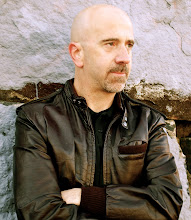
My brand-new thriller, PARALLAX VIEW, is now available. I'm very excited about this book and will be posting several preview chapters over the course of the day. Here's Chapter Four:
4
Berlin, German Democratic Republic
May 29, 1987, 10:20 p.m.
The vodka burned in a familiar and not unpleasant way as it rolled down Aleksander Petrovka’s throat. He gulped down his first glass in a matter of seconds and realized he should have ordered two at once from the heavy-set barmaid when she had made her first pass by his table. He shrugged. She would return soon. Any good barmaid could recognize the heaviest drinkers in a crowd instantly. Her livelihood depended upon it.
Aleksander knew it was critical that he keep his head clear and his wits about him during the upcoming rendezvous. This was only his second trip into the GDR, and every face appeared hostile, suspicious of the Russian interloper. But the prospect of getting through the next hour—indeed, the rest of his life—without the fuzzy reassurance provided by a liberal dose of vodka was unthinkable. The enormity of this mission was not lost on Aleksander, nor was its potential to destroy his life, and for the thousandth time since yesterday afternoon he questioned his commitment to General Secretary Mikhail Gorbachev.
Nobody defied the KGB and got away with it.
And Aleksander knew that by carrying out the instructions Gorbachev had given him, he was defying the KGB. There was simply no other way to look at it. The very circumstances of their meeting this morning were enough to convince him of that fact.
No office.
No aides.
Just him and the most powerful man in the Soviet Union.
Aleksander forced his thoughts back to the present and the raucous East German club. He maintained a continuous watch on the crowded discotheque, eyes darting, searching for potential threats. The notion that the Undersecretary for Domestic Affairs, the very definition of an anonymous apparatchik, would recognize a threat even if it stood before him and announced itself, was laughable. Aleksander knew this, yet he could not stop himself.
In his obsessive concern for security, Aleksander almost missed the blocky figure of the barmaid approaching his table. She asked him a question, which was lost in the din of the club and the uncertainty of a foreign language, and Aleksander nodded, handing her his empty glass. He assumed she must have asked if he wanted another drink, which he most certainly did. What else could it be?
The barmaid took his glass and clomped away. Standing directly behind her, completely hidden by her bulk until she stepped around him, was a smallish, unassuming-looking man, dressed casually, with a receding head of buzz-cut sandy hair and a pale face dominated by black horn-rimmed glasses. And a jagged scar running diagonally down his right cheek. In his hand he clutched a glass of clear liquid, presumably vodka.
The man nodded at Aleksander, then sat across the small table without waiting to be invited. “It has been a long time, Dolph,” he said with a tight-lipped smile.
Aleksander stared at the man, nerves tightening. He was supposed to respond. Call the man by a code name. What was it? He had been rehearsing it a moment ago and now it was gone.
The man’s eyes narrowed at him and sweat broke out on Aleksander’s forehead. He felt as though he might suffer a heart attack. Then he remembered. “Henrik!” he burst out. “It is wonderful to see you, Henrik.”
The stranger relaxed and leaned across the table, waiting to speak until Aleksander had leaned forward as well, then said softly, “Do you have the item?” His Russian was flawless.
The barmaid returned with his drink and Aleksander remained quiet while she dropped the glass onto the table, vodka slopping over the side. As her hefty form plowed back through the crowd toward the bar—Aleksander could not help picturing a gigantic Tupolev airplane steaming down the runway for takeoff—he turned his attention back to his new friend. The man sat drumming his fingers.
Aleksander nodded. “Da. I have it.”
He reached into his breast pocket for the envelope before realizing how conspicuous it would look for him to withdraw the item here in the tavern and pass it across the table to his contact. Although no one seemed to be paying attention to them, Aleksander knew someone would remember once the KGB started questioning people. The KGB could be very persuasive.
Suddenly terrified, Aleksander froze, hand on the envelope sticking out of his pocket. What should he do? How could he avoid becoming the object of everyone’s attention and still complete the mission Mikhail Gorbachev had entrusted to him? The Soviet leader was not someone to be trifled with. In his own way he was as imposing and intimidating as the faceless killers of the KGB. One didn’t rise to the position of General Secretary of the Communist Party without possessing an iron will and a ruthless efficiency.
The contact saved him. He smiled reassuringly, rising and leaning over the table, clapping Aleksander on the shoulder with one hand and deftly plucking the envelope from Aleksander’s pocket with his other. The envelope disappeared in an impressive sleight of hand, one worthy of a professional pickpocket. “You’re doing fine,” the man said, again in Russian, as he eased back into his chair. He had clearly been briefed he would be dealing with a novice.
Then he continued, speaking quietly. “Here’s what we’re going to do,” he said. “We’ll share a drink and light conversation, just a couple of old friends catching up. Then I will get up and leave the club. You will wait a few minutes, then follow.”
The contact leaned back and began laughing uproariously, as if Aleksander had just said the funniest thing he had ever heard. Aleksander stared, surprised by the man’s sudden outburst, before realizing he was supposed to join in. So he did, feeling silly. The he took a big pull on his vodka, emptying the glass. The fuzzy reassurance he had been waiting for began to tingle through him and Aleksander welcomed it with enthusiasm.
He waved the barmaid over to their table—she hadn’t gotten any better looking, even after two tall vodkas—and ordered another round for himself and his new friend. After all, it was what the man had just said he was supposed to do, right? The shroud of fear and uncertainty that had been hanging over Aleksander since his meeting with the General Secretary began to lift. For the first time Aleksander began to believe things might actually turn out all right. He was almost finished with this frightening business, and then he could return to Moscow and get on with his life, safe and secure in his bureaucratic anonymity.
His contact made small talk for a few minutes, and Aleksander returned the conversation with inanities of his own. They laughed now and then, just two men reconnecting after time apart. They could be friends, brothers, co-workers. Still no one appeared to be watching. Aleksander’s concern continued to melt away. He knew it was probably due to the effects of the alcohol but didn’t care.
At last, Aleksander’s contact pushed his chair back on the dirty floor and stood. Aleksander stood too and the man with the scar reached across the small table, shaking his hand and drawing him close at the same time. “Remember,” he whispered in Aleksander’s ear. “Go nowhere for the next few minutes. Have another drink, relax. Allow time for me to slip away. Then you should disappear. Good luck.” Then he laughed again, smiling and nodding at Aleksander.
He turned on his heel and melted into the crowd.
Tuesday, January 15, 2013


PARALLAX VIEW, Chapter Three
My brand-new thriller, PARALLAX VIEW, is now available. I'm very excited about this book and will be posting several preview chapters over the course of the day. Here's Chapter Three:
3
The Kremlin, Moscow
May 29, 1987, 10:10 a.m.
Aleksander Petrovka was suspicious and nervous—Mikhail could see that the moment the man entered his office. Petrovka worked in the Kremlin as a member of Mikhail Gorbachev’s personal staff, but his status within Gorbachev’s inner circle was not so lofty that he had ever had occasion to take a private meeting with the general secretary.
“Aleksander,” he said, rising and extending his hand. It was critical he put his underling at ease.
Petrovka shook his hand uncertainly. “You wished to see me, sir?”
“I did,” Mikhail said, smiling. “Let us stroll the grounds.” He knew this development would arouse further concern in Petrovka, but it could not be helped. His office was certainly under surveillance, with listening devices as well as cameras, so broaching the subject here would get them both arrested for treason before an hour had passed.
The men remained silent until they had exited the building. Mikhail could feel Aleksander’s discomfort. It was rolling off him in waves. As they strolled through flower gardens just beginning to bloom in the dank Moscow climate, the secretary spoke in a near-whisper to avoid detection by ubiquitous KGB listening devices. “You are being entrusted with a great honor,” he began. “A patriotic duty. You are being given the opportunity to perform a service to your country far beyond any you may previously have imagined possible.”
Aleksander remained silent and Mikhail removed an innocent-looking envelope from his suit coat. He held it up for Aleksander’s inspection, but kept it close to his body, hoping to conceal it as much as possible from view of surveillance cameras. “You are to leave immediately—we will provide you with a change of clothes for your overnight stay in the GDR. You will be driven straight to Tushino Airfield and fly via private plane to Berlin, where you will pass this envelope along to an operative at the location specified in your paperwork. Please note the envelope has been sealed in wax with my personal insignia, and its contents are classified Top Secret, not for your eyes or anyone else’s except its intended recipient. The consequences of opening it would be severe and immediate. Do you understand, comrade?”
Aleksander nodded slowly. Mikhail could see that he understood. Severe consequences in Russia meant only one thing.
“How will I recognize the envelope’s recipient?” Aleksander asked.
“I am told he suffered facial disfigurement in an automobile accident years ago. A long scar on his right cheek. But you needn’t worry, I have passed your description along and your contact will be watching for you. He will address you as ‘Dolph’ and you will respond, ‘Hello, Henrik.’”
The secretary continued. “After delivering the envelope to your contact, your mission will be complete. You may enjoy the rest of your evening in East Berlin and then fly home tomorrow. Simple, yes?”
Mikhail knew Aleksander wanted to question him. Hell, he could see the man wanted to refuse the assignment. But he also knew he would do as asked. His place was not to question. He was a bureaucrat and had been given an assignment by the most powerful man in the USSR. What else could he do?
Aleksander reached out reluctantly and took the envelope. “Remember,” Mikhail said. “No one is to open this letter.”
“What if…” Aleksander’s voice trailed off.
“What?” Mikhail asked, annoyed. The lack of sleep was catching up to him and he still had a long day ahead.
“Well, what if I am challenged, you know, by the authorities?”
Mikhail reached into his pocket and removed a pen and a small pad of paper. He jotted something down and handed it to Aleksander. “The authorities would have no reason to challenge you, but if you encounter any difficulties, this is my personal telephone number. Anyone wishing to question you can call me, any time, day or night, and I will be happy to explain the situation.”
It was clear to Mikhail that Aleksander was not pleased, but that did not matter. He placed the envelope in the interior breast pocket of his suit coat and the men began walking toward the building. Mikhail knew he had just passed the point of no return. He hoped Aleksander Petrovka was up to the challenge.
***
The Kremlin, Moscow
KGB monitoring station
May 29, 1987, 10:30 a.m.
Viktor Kovalenko squinted, his eyes glued to a tiny black-and-white monitor. The screen was crammed into a metal rack mounted on the wall next to his desk, alongside eleven similar monitors, each transmitting a different view of the exterior of the Kremlin.
The image was small, but he could see enough to know something unusual was happening. General Secretary Gorbachev was speaking with one of his assistants, something he did regularly throughout the day. But normally the men would be surrounded by aides and secretaries and assorted party apparatchiks. This meeting was being conducted one-on-one, almost an unheard-of scenario with a low-level bureaucrat like Aleksander Petrovka.
The men were engrossed in an intense conversation, Gorbachev doing most of the talking, Petrovka’s body language suggesting he would rather be almost anywhere else in the world. Gorbachev removed something from his pocket and after stressing a point, finger waggling, handed the object to Petrovka.
Kovalenko glanced at his watch and jotted the time down on a small pad of paper, along with a notation regarding Gorbachev’s odd behavior. He squinted, watching the small Russian-made Ekran television monitor closely as he lit a cigarette and took a deep drag. Tried to determine the relative importance of what he was seeing. Decided to play it safe. He picked up a telephone handset and dialed a number from memory.
The call was answered on the first ring, as Kovalenko knew it would be. It always was. He laid out the details on the phone for the KGB watch commander: The virtually unprecedented change to General Secretary Gorbachev’s routine. The seeming reluctance with which Aleksander Petrovka received what Gorbachev had to say. The secretive passing of an object, perhaps an envelope, between the two men.
Despite his familiarity with Gorbachev—he had been assigned to this post for over three years—Kovalenko could not guess what the General Secretary might be up to. Something was definitely amiss, though.
Colonel Kopalev listened without comment for five minutes or more as Kovalenko reported his observations. Finally, when Kovalenko had finished, the colonel said, “Continue observing Secretary Gorbachev. When he leaves his office for the day, I want it thoroughly but discreetly searched. Have your men look for anything unusual and then report back to me with your findings.”
Kovalenko grimaced. “Colonel, the object was passed to Petrovka. I seriously doubt any evidence will remain in Secretary Gorbachev’s office by the end of the day. There’s probably none in there now. If I may suggest following Petrovka—”
“Thank you for your assessment, Major. Of course we will follow Comrade Petrovka. But it changes nothing as far as you are concerned. You have your orders. I will expect to hear from you immediately if your search turns up any useable information.”
“Yes sir,” Kovalenko replied, and the connection was abruptly broken at the other end. His boss had just slammed down the receiver. He replaced the handset in its cradle and lifted his middle finger at it, fully aware that he might be under surveillance as well, that his insolence was probably being observed, but was annoyed enough not to care.
He lit another cigarette and resumed observing the activity in and around the Kremlin.
3
The Kremlin, Moscow
May 29, 1987, 10:10 a.m.
Aleksander Petrovka was suspicious and nervous—Mikhail could see that the moment the man entered his office. Petrovka worked in the Kremlin as a member of Mikhail Gorbachev’s personal staff, but his status within Gorbachev’s inner circle was not so lofty that he had ever had occasion to take a private meeting with the general secretary.
“Aleksander,” he said, rising and extending his hand. It was critical he put his underling at ease.
Petrovka shook his hand uncertainly. “You wished to see me, sir?”
“I did,” Mikhail said, smiling. “Let us stroll the grounds.” He knew this development would arouse further concern in Petrovka, but it could not be helped. His office was certainly under surveillance, with listening devices as well as cameras, so broaching the subject here would get them both arrested for treason before an hour had passed.
The men remained silent until they had exited the building. Mikhail could feel Aleksander’s discomfort. It was rolling off him in waves. As they strolled through flower gardens just beginning to bloom in the dank Moscow climate, the secretary spoke in a near-whisper to avoid detection by ubiquitous KGB listening devices. “You are being entrusted with a great honor,” he began. “A patriotic duty. You are being given the opportunity to perform a service to your country far beyond any you may previously have imagined possible.”
Aleksander remained silent and Mikhail removed an innocent-looking envelope from his suit coat. He held it up for Aleksander’s inspection, but kept it close to his body, hoping to conceal it as much as possible from view of surveillance cameras. “You are to leave immediately—we will provide you with a change of clothes for your overnight stay in the GDR. You will be driven straight to Tushino Airfield and fly via private plane to Berlin, where you will pass this envelope along to an operative at the location specified in your paperwork. Please note the envelope has been sealed in wax with my personal insignia, and its contents are classified Top Secret, not for your eyes or anyone else’s except its intended recipient. The consequences of opening it would be severe and immediate. Do you understand, comrade?”
Aleksander nodded slowly. Mikhail could see that he understood. Severe consequences in Russia meant only one thing.
“How will I recognize the envelope’s recipient?” Aleksander asked.
“I am told he suffered facial disfigurement in an automobile accident years ago. A long scar on his right cheek. But you needn’t worry, I have passed your description along and your contact will be watching for you. He will address you as ‘Dolph’ and you will respond, ‘Hello, Henrik.’”
The secretary continued. “After delivering the envelope to your contact, your mission will be complete. You may enjoy the rest of your evening in East Berlin and then fly home tomorrow. Simple, yes?”
Mikhail knew Aleksander wanted to question him. Hell, he could see the man wanted to refuse the assignment. But he also knew he would do as asked. His place was not to question. He was a bureaucrat and had been given an assignment by the most powerful man in the USSR. What else could he do?
Aleksander reached out reluctantly and took the envelope. “Remember,” Mikhail said. “No one is to open this letter.”
“What if…” Aleksander’s voice trailed off.
“What?” Mikhail asked, annoyed. The lack of sleep was catching up to him and he still had a long day ahead.
“Well, what if I am challenged, you know, by the authorities?”
Mikhail reached into his pocket and removed a pen and a small pad of paper. He jotted something down and handed it to Aleksander. “The authorities would have no reason to challenge you, but if you encounter any difficulties, this is my personal telephone number. Anyone wishing to question you can call me, any time, day or night, and I will be happy to explain the situation.”
It was clear to Mikhail that Aleksander was not pleased, but that did not matter. He placed the envelope in the interior breast pocket of his suit coat and the men began walking toward the building. Mikhail knew he had just passed the point of no return. He hoped Aleksander Petrovka was up to the challenge.
***
The Kremlin, Moscow
KGB monitoring station
May 29, 1987, 10:30 a.m.
Viktor Kovalenko squinted, his eyes glued to a tiny black-and-white monitor. The screen was crammed into a metal rack mounted on the wall next to his desk, alongside eleven similar monitors, each transmitting a different view of the exterior of the Kremlin.
The image was small, but he could see enough to know something unusual was happening. General Secretary Gorbachev was speaking with one of his assistants, something he did regularly throughout the day. But normally the men would be surrounded by aides and secretaries and assorted party apparatchiks. This meeting was being conducted one-on-one, almost an unheard-of scenario with a low-level bureaucrat like Aleksander Petrovka.
The men were engrossed in an intense conversation, Gorbachev doing most of the talking, Petrovka’s body language suggesting he would rather be almost anywhere else in the world. Gorbachev removed something from his pocket and after stressing a point, finger waggling, handed the object to Petrovka.
Kovalenko glanced at his watch and jotted the time down on a small pad of paper, along with a notation regarding Gorbachev’s odd behavior. He squinted, watching the small Russian-made Ekran television monitor closely as he lit a cigarette and took a deep drag. Tried to determine the relative importance of what he was seeing. Decided to play it safe. He picked up a telephone handset and dialed a number from memory.
The call was answered on the first ring, as Kovalenko knew it would be. It always was. He laid out the details on the phone for the KGB watch commander: The virtually unprecedented change to General Secretary Gorbachev’s routine. The seeming reluctance with which Aleksander Petrovka received what Gorbachev had to say. The secretive passing of an object, perhaps an envelope, between the two men.
Despite his familiarity with Gorbachev—he had been assigned to this post for over three years—Kovalenko could not guess what the General Secretary might be up to. Something was definitely amiss, though.
Colonel Kopalev listened without comment for five minutes or more as Kovalenko reported his observations. Finally, when Kovalenko had finished, the colonel said, “Continue observing Secretary Gorbachev. When he leaves his office for the day, I want it thoroughly but discreetly searched. Have your men look for anything unusual and then report back to me with your findings.”
Kovalenko grimaced. “Colonel, the object was passed to Petrovka. I seriously doubt any evidence will remain in Secretary Gorbachev’s office by the end of the day. There’s probably none in there now. If I may suggest following Petrovka—”
“Thank you for your assessment, Major. Of course we will follow Comrade Petrovka. But it changes nothing as far as you are concerned. You have your orders. I will expect to hear from you immediately if your search turns up any useable information.”
“Yes sir,” Kovalenko replied, and the connection was abruptly broken at the other end. His boss had just slammed down the receiver. He replaced the handset in its cradle and lifted his middle finger at it, fully aware that he might be under surveillance as well, that his insolence was probably being observed, but was annoyed enough not to care.
He lit another cigarette and resumed observing the activity in and around the Kremlin.
PARALLAX VIEW, Chapter Two
My brand-new thriller, PARALLAX VIEW, is now available. I'm very excited about this book and will be posting several preview chapters over the course of the day. Here's Chapter Two:
2
The Kremlin, Moscow
Mikhail Gorbachev’s residence
May 28, 1987, 11:15 p.m.
Mikhail Gorbachev trudged into his den. He was exhausted and felt like a man carrying the weight of the world on his shoulders. Raisa had gone to bed hours ago, but sleep would be elusive for Mikhail tonight. He eased into his plush leather office chair, selected a sheet of custom stationery, and got to work.
This might be the most important letter he would ever write, and it was imperative he compose it here, at home. Working in his office, filled as it was with monitoring equipment, would risk his words being seen by the wrong set of eyes.
KGB eyes.
So he began writing, taking his time despite the fact he had put in a full day already and had another long day planned for tomorrow. He paused every few words to rub his chin and think. It was critical every word be phrased to convey the proper sense of urgency. Mikhail knew full well the letter’s recipient would be suspicious, if not outright dismissive, of the veracity of his words and the motives behind them. And that was assuming the letter even reached its intended destination.
Mikhail realized he was probably under surveillance here, too, but working at night in his home office was not an unusual occurrence and should not elicit undue suspicion. More importantly, the quality of the surveillance cameras here was likely a step below those in his executive office. It was a risk, but a calculated one, and one worth taking.
He had long-since grown accustomed to being watched. Clandestine KGB surveillance was ingrained in the consciousness of Soviet society, accepted as just as much a part of the late-twentieth century Russian experience as exquisite vodka and blisteringly cold winters. Still, he hunched over his work, shielding the letter to the maximum extent possible with his body’s bulk. The KGB might not be able to read the specifics of what he was writing, but they could probably guess the subject. And that made this communique one of the most dangerous pieces of paper in the world.
Once he finished crafting the letter, the next step would be to enlist a trustworthy courier to make delivery. That would be a tricky and dangerous proposition, and where his plan could easily fall apart. A contact well-versed in espionage techniques would be the obvious choice, and as Soviet General Secretary, Gorbachev could take his pick of the skilled KGB operatives in their considerable arsenal.
But there was a problem. This assignment would require personal loyalty, and a career spy would have no reason to offer such loyalty to Mikhail Gorbachev. In theory, Russia’s espionage service existed to support the Communist party, of which he was titular head. The reality, however, was much different. KGB officials enjoyed tremendous power and were accustomed to wielding that power to their own benefit. Mikhail knew if he entrusted this mission to the KGB, the document would not be out of his hands thirty minutes before it would be undergoing intensive scrutiny. And the consequences of that could be dire.
But Mikhail Gorbachev had not risen to power through the cutthroat ranks of the Soviet political system by being timid—or by being stupid. He wielded power and influence, too, and his inner circle was filled with men fiercely protective of him. Not only because he was their friend and confidant, but also because their livelihoods depended upon his maintaining power. Were he to be overthrown, the new Russian leader would bring in new lieutenants, disposing of the old power brokers in whatever manner he saw fit.
Including making the most knowledgeable—and thus most dangerous—of them disappear.
Gorbachev knew the courier would have to be a man inside his inner circle, but it could not be someone so close to the General Secretary that he was indispensable, because the odds of the man completing the mission successfully and also returning alive were slim. Practically nil, he thought grimly.
The Soviet leader took a break from composing his letter and flipped it face down, then stretched out in his chair. His eyes were tired, burning from the exhaustion of a full day followed by the stress of tonight’s illicit work. Tomorrow he would have to carry on as though he had gotten a good night’s sleep. It would not be easy, but then nothing was easy in a world where Mother Russia’s hold over the rest of the Soviet republics was slipping steadily away.
The world was shrinking, and people who at one time were easily controlled via intimidation were beginning to demand freedoms unthinkable just a decade ago under Russian rule. No one inside the Kremlin wanted to admit it, but the burden of repressing the citizens of so many nations, all yearning for freedom and self-government, was stretching the Soviet Union to the breaking point. The largest military in the world was not going to be enough. Things had to change, and they had to change soon, but most inside the ruling body of the USSR refused to see it. They buried their heads in the sand and pretended the year was still 1962.
Mikhail Gorbachev knew better. The Soviet Union was headed for disaster. It was inevitable, and would tear his country apart. The KGB had set a plan in motion that would cause a massive shift in global conditions, allowing them to consolidate their own hold on power, and he could not allow that plan to happen. It was too extreme. It would trigger World War Three.
So he would do what must be done. But to challenge the KGB openly would be foolhardy and likely considered treasonous. He would disappear without a trace in the middle of the night, just like millions of his countrymen had disappeared under Josef Stalin. The KGB could make it happen, his status as Communist Party General Secretary notwithstanding, and no one would question a thing. A new leader would be installed and the system would lurch along toward its own demise.
This was why he worked in exhausted solitude at his desk while the rest of Moscow slumbered. This was why he risked everything. For his beloved country. He yawned and rubbed his eyes. He whittled down the list of potential couriers in his mind. He chewed on them endlessly until he decided on the perfect candidate.
Aleksander Petrovka’s official title was Undersecretary for Domestic Affairs. Aleksander would do as instructed, particularly if properly motivated. He was fairly intelligent for a party apparatchik, maybe even intelligent enough to pull off what Mikhail needed of him.
Tomorrow they would talk, and Mikhail would put his own plan in motion, the one which would, with any luck, negate the KGB’s. He would dispatch Petrovka to East Berlin on the first available plane. The KGB would know something was up but would not have time to stop him, provided Mikhail acted quickly and decisively.
He nodded, alone in his office. Having decided upon a courier, Mikhail felt a great weight lifting from his shoulders. The plan would either work or it would not, but solidifying things, even if only in his mind, made Mikhail feel better, like he was accomplishing something of significance. He straightened in his chair and got back to work.
2
The Kremlin, Moscow
Mikhail Gorbachev’s residence
May 28, 1987, 11:15 p.m.
Mikhail Gorbachev trudged into his den. He was exhausted and felt like a man carrying the weight of the world on his shoulders. Raisa had gone to bed hours ago, but sleep would be elusive for Mikhail tonight. He eased into his plush leather office chair, selected a sheet of custom stationery, and got to work.
This might be the most important letter he would ever write, and it was imperative he compose it here, at home. Working in his office, filled as it was with monitoring equipment, would risk his words being seen by the wrong set of eyes.
KGB eyes.
So he began writing, taking his time despite the fact he had put in a full day already and had another long day planned for tomorrow. He paused every few words to rub his chin and think. It was critical every word be phrased to convey the proper sense of urgency. Mikhail knew full well the letter’s recipient would be suspicious, if not outright dismissive, of the veracity of his words and the motives behind them. And that was assuming the letter even reached its intended destination.
Mikhail realized he was probably under surveillance here, too, but working at night in his home office was not an unusual occurrence and should not elicit undue suspicion. More importantly, the quality of the surveillance cameras here was likely a step below those in his executive office. It was a risk, but a calculated one, and one worth taking.
He had long-since grown accustomed to being watched. Clandestine KGB surveillance was ingrained in the consciousness of Soviet society, accepted as just as much a part of the late-twentieth century Russian experience as exquisite vodka and blisteringly cold winters. Still, he hunched over his work, shielding the letter to the maximum extent possible with his body’s bulk. The KGB might not be able to read the specifics of what he was writing, but they could probably guess the subject. And that made this communique one of the most dangerous pieces of paper in the world.
Once he finished crafting the letter, the next step would be to enlist a trustworthy courier to make delivery. That would be a tricky and dangerous proposition, and where his plan could easily fall apart. A contact well-versed in espionage techniques would be the obvious choice, and as Soviet General Secretary, Gorbachev could take his pick of the skilled KGB operatives in their considerable arsenal.
But there was a problem. This assignment would require personal loyalty, and a career spy would have no reason to offer such loyalty to Mikhail Gorbachev. In theory, Russia’s espionage service existed to support the Communist party, of which he was titular head. The reality, however, was much different. KGB officials enjoyed tremendous power and were accustomed to wielding that power to their own benefit. Mikhail knew if he entrusted this mission to the KGB, the document would not be out of his hands thirty minutes before it would be undergoing intensive scrutiny. And the consequences of that could be dire.
But Mikhail Gorbachev had not risen to power through the cutthroat ranks of the Soviet political system by being timid—or by being stupid. He wielded power and influence, too, and his inner circle was filled with men fiercely protective of him. Not only because he was their friend and confidant, but also because their livelihoods depended upon his maintaining power. Were he to be overthrown, the new Russian leader would bring in new lieutenants, disposing of the old power brokers in whatever manner he saw fit.
Including making the most knowledgeable—and thus most dangerous—of them disappear.
Gorbachev knew the courier would have to be a man inside his inner circle, but it could not be someone so close to the General Secretary that he was indispensable, because the odds of the man completing the mission successfully and also returning alive were slim. Practically nil, he thought grimly.
The Soviet leader took a break from composing his letter and flipped it face down, then stretched out in his chair. His eyes were tired, burning from the exhaustion of a full day followed by the stress of tonight’s illicit work. Tomorrow he would have to carry on as though he had gotten a good night’s sleep. It would not be easy, but then nothing was easy in a world where Mother Russia’s hold over the rest of the Soviet republics was slipping steadily away.
The world was shrinking, and people who at one time were easily controlled via intimidation were beginning to demand freedoms unthinkable just a decade ago under Russian rule. No one inside the Kremlin wanted to admit it, but the burden of repressing the citizens of so many nations, all yearning for freedom and self-government, was stretching the Soviet Union to the breaking point. The largest military in the world was not going to be enough. Things had to change, and they had to change soon, but most inside the ruling body of the USSR refused to see it. They buried their heads in the sand and pretended the year was still 1962.
Mikhail Gorbachev knew better. The Soviet Union was headed for disaster. It was inevitable, and would tear his country apart. The KGB had set a plan in motion that would cause a massive shift in global conditions, allowing them to consolidate their own hold on power, and he could not allow that plan to happen. It was too extreme. It would trigger World War Three.
So he would do what must be done. But to challenge the KGB openly would be foolhardy and likely considered treasonous. He would disappear without a trace in the middle of the night, just like millions of his countrymen had disappeared under Josef Stalin. The KGB could make it happen, his status as Communist Party General Secretary notwithstanding, and no one would question a thing. A new leader would be installed and the system would lurch along toward its own demise.
This was why he worked in exhausted solitude at his desk while the rest of Moscow slumbered. This was why he risked everything. For his beloved country. He yawned and rubbed his eyes. He whittled down the list of potential couriers in his mind. He chewed on them endlessly until he decided on the perfect candidate.
Aleksander Petrovka’s official title was Undersecretary for Domestic Affairs. Aleksander would do as instructed, particularly if properly motivated. He was fairly intelligent for a party apparatchik, maybe even intelligent enough to pull off what Mikhail needed of him.
Tomorrow they would talk, and Mikhail would put his own plan in motion, the one which would, with any luck, negate the KGB’s. He would dispatch Petrovka to East Berlin on the first available plane. The KGB would know something was up but would not have time to stop him, provided Mikhail acted quickly and decisively.
He nodded, alone in his office. Having decided upon a courier, Mikhail felt a great weight lifting from his shoulders. The plan would either work or it would not, but solidifying things, even if only in his mind, made Mikhail feel better, like he was accomplishing something of significance. He straightened in his chair and got back to work.
PARALLAX VIEW, Chapter One
My brand-new thriller, PARALLAX VIEW, is now available. I'm very excited about this book and will be posting several preview chapters over the course of the day. Here's Chapter One:
1
Nikolayev South Shipyard, Ukraine
May 20, 1987 – late in the Cold War
2:25 a.m.
Tracie Tanner carefully eased one drawer closed and opened another in the dented, World War II-era metal filing cabinet wedged behind the desk of the general manager’s office at Shipyard No. 444. Where’s that damned file? She’d been searching for nearly half an hour already with no luck, unable to decipher the Soviets’ Byzantine filing system.
Her eyes burned from the strain of reading reports typed in Cyrillic on substandard Russian-made typewriters, and she could sense time ticking away—surveillance reports indicated the guards’ patrol patterns included a walk-through of this very office every forty-five minutes or so.
The darkened office smelled sour, its cement block construction retaining the unpleasant fishy stench of the Black Sea combined with old sweat. She clenched a small penlight between her teeth to free up both hands for the search, and she worked methodically, flipping through file after file under the most likely tab headings.
Tracie, a CIA clandestine ops specialist, had been assigned to remove the guidance system software specs for the Soviet aircraft carrier Buka, scheduled for commission later this year, and replace them with bogus specifications. Construction had been completed on Buka years earlier, but bugs in the ship’s sophisticated software had delayed commissioning ever since.
Four years ago, in a successful nighttime operation, another CIA clandestine ops specialist had broken into this very office and replaced the proper specs with useless, CIA-generated data. Now the goal was to repeat the scenario and delay launch of the Buka for several more months, if possible.
Tracie worked quickly but thoroughly. Next to the office door the Soviet bureaucrat in charge had placed a large aquarium filled with exotic fish, and the steady drone of the water filter motor began to lull her into drowsiness. She blinked hard, closed the filing cabinet drawer, and opened another. She had worked her way through nearly two-thirds of the file cabinet and had found nothing.
And then, there it was. The first folder in the new drawer. It was blue, filled with several dozen sheets of numbers, diagrams and specifications. Tracie lifted out the folder and compared some of the sheets inside it to corresponding sheets of paper in the dummy file she had brought into the office. They appeared identical. The differences in the specifications were so minute it would take a team of engineers months to decipher the problem, and that was after they had discovered there was a problem.
She smiled in the darkness and removed the original specs, sliding the forged documents into the file folder in their place. She rolled the drawer closed, slowly and quietly, and then stood, glad to be finished. She placed the original software specs into a small briefcase and snapped it shut.
Padded quietly across the office.
And dropped her flashlight. It slipped out of her hand and clattered to the floor, rolling to a stop against the door.
Dammit.
Tracie froze, waiting to hear a shouted challenge or footsteps pounding down the hallway.
Nothing.
She waited fifteen seconds. Thirty. Then breathed a silent sigh of relief and picked up the flashlight. Be more careful, dummy.
She eased the door open and stepped into the hallway. And walked straight into a Soviet security guard’s Makarov semiautomatic pistol.
Tracie stepped backward instinctively, calculating the odds of reaching her Beretta 9mm inside the shoulder holster under her jacket. Result: not good.
The guard said, “Stay right where you are,” in Russian, and Tracie moved back another three steps, hoping he would follow her into the office. He did.
She stepped back and he moved forward. Stepped back again and he followed, still holding the gun on her. She backed into the general manager’s desk, studying the guard. He was barely more than a kid, maybe eighteen or nineteen, and he wore a threadbare Red Army uniform that had probably been handed down from soldier to soldier two or three times, maybe more. His hands were shaking, just a little, and he said, “You’re coming with me.”
I don’t think so, Tracie thought, but raised her hands to chest level in submission. “All right,” she answered in Russian, hoping her slight English accent would be undetectable. “This is a simple misunderstanding. I can explain.”
“Not my problem,” the guard said. “You will explain to my superiors.” He gestured with his head toward the door. “Go,” he told her, “and do not try anything stupid.” The Makarov stuttered and jumped and Tracie hoped he wouldn’t shoot her by accident.
The guard stepped aside to allow Tracie to pass him into the hallway. He brushed up against the table holding the aquarium, and as she moved past him, she pushed hard, a blur of sudden motion in the semi-darkness, and smashed his hands, gun and all, straight down into the side wall of the aquarium.
The glass shattered and the guard gasped, the sound almost but not quite a scream. He pulled the trigger reflexively and the gun fired, the slug whizzing past Tracie’s head. A wave of water and fish flooded out of the tank, soaking Tracie and the guard. Even in the dim light she could see the razor-sharp glass had ripped a gash in the guard’s forearm. Had she been sliced, too? No time to worry about that now.
The guard stumbled forward and Tracie ripped the gun out of his hands and slammed it against his temple. He sank to his knees, stunned. She hit him again and he dropped to the floor. He didn’t move. She prodded him with her foot and he lay unresponsive. He was out.
But now she had another problem. The shipyard was patrolled at night by a team of two guards, and if the other man was anywhere near he would have heard the gunfire. He could be rushing here right now. He could be on her in seconds. Tracie unlatched the briefcase and dropped the guard’s Makarov inside, then snapped it shut and eased out the door, her Beretta drawn, alert for any signs of the second guard.
He was nowhere in sight.
She made her way out of the building and through the shipyard, moving between concrete and aluminum structures like a wraith. At the edge of the shipyard property, she turned toward the Black Sea shoreline and an inflatable boat which would take her to a U.S. submarine stationed nearby. She disappeared into the black Ukrainian night.
1
Nikolayev South Shipyard, Ukraine
May 20, 1987 – late in the Cold War
2:25 a.m.
Tracie Tanner carefully eased one drawer closed and opened another in the dented, World War II-era metal filing cabinet wedged behind the desk of the general manager’s office at Shipyard No. 444. Where’s that damned file? She’d been searching for nearly half an hour already with no luck, unable to decipher the Soviets’ Byzantine filing system.
Her eyes burned from the strain of reading reports typed in Cyrillic on substandard Russian-made typewriters, and she could sense time ticking away—surveillance reports indicated the guards’ patrol patterns included a walk-through of this very office every forty-five minutes or so.
The darkened office smelled sour, its cement block construction retaining the unpleasant fishy stench of the Black Sea combined with old sweat. She clenched a small penlight between her teeth to free up both hands for the search, and she worked methodically, flipping through file after file under the most likely tab headings.
Tracie, a CIA clandestine ops specialist, had been assigned to remove the guidance system software specs for the Soviet aircraft carrier Buka, scheduled for commission later this year, and replace them with bogus specifications. Construction had been completed on Buka years earlier, but bugs in the ship’s sophisticated software had delayed commissioning ever since.
Four years ago, in a successful nighttime operation, another CIA clandestine ops specialist had broken into this very office and replaced the proper specs with useless, CIA-generated data. Now the goal was to repeat the scenario and delay launch of the Buka for several more months, if possible.
Tracie worked quickly but thoroughly. Next to the office door the Soviet bureaucrat in charge had placed a large aquarium filled with exotic fish, and the steady drone of the water filter motor began to lull her into drowsiness. She blinked hard, closed the filing cabinet drawer, and opened another. She had worked her way through nearly two-thirds of the file cabinet and had found nothing.
And then, there it was. The first folder in the new drawer. It was blue, filled with several dozen sheets of numbers, diagrams and specifications. Tracie lifted out the folder and compared some of the sheets inside it to corresponding sheets of paper in the dummy file she had brought into the office. They appeared identical. The differences in the specifications were so minute it would take a team of engineers months to decipher the problem, and that was after they had discovered there was a problem.
She smiled in the darkness and removed the original specs, sliding the forged documents into the file folder in their place. She rolled the drawer closed, slowly and quietly, and then stood, glad to be finished. She placed the original software specs into a small briefcase and snapped it shut.
Padded quietly across the office.
And dropped her flashlight. It slipped out of her hand and clattered to the floor, rolling to a stop against the door.
Dammit.
Tracie froze, waiting to hear a shouted challenge or footsteps pounding down the hallway.
Nothing.
She waited fifteen seconds. Thirty. Then breathed a silent sigh of relief and picked up the flashlight. Be more careful, dummy.
She eased the door open and stepped into the hallway. And walked straight into a Soviet security guard’s Makarov semiautomatic pistol.
Tracie stepped backward instinctively, calculating the odds of reaching her Beretta 9mm inside the shoulder holster under her jacket. Result: not good.
The guard said, “Stay right where you are,” in Russian, and Tracie moved back another three steps, hoping he would follow her into the office. He did.
She stepped back and he moved forward. Stepped back again and he followed, still holding the gun on her. She backed into the general manager’s desk, studying the guard. He was barely more than a kid, maybe eighteen or nineteen, and he wore a threadbare Red Army uniform that had probably been handed down from soldier to soldier two or three times, maybe more. His hands were shaking, just a little, and he said, “You’re coming with me.”
I don’t think so, Tracie thought, but raised her hands to chest level in submission. “All right,” she answered in Russian, hoping her slight English accent would be undetectable. “This is a simple misunderstanding. I can explain.”
“Not my problem,” the guard said. “You will explain to my superiors.” He gestured with his head toward the door. “Go,” he told her, “and do not try anything stupid.” The Makarov stuttered and jumped and Tracie hoped he wouldn’t shoot her by accident.
The guard stepped aside to allow Tracie to pass him into the hallway. He brushed up against the table holding the aquarium, and as she moved past him, she pushed hard, a blur of sudden motion in the semi-darkness, and smashed his hands, gun and all, straight down into the side wall of the aquarium.
The glass shattered and the guard gasped, the sound almost but not quite a scream. He pulled the trigger reflexively and the gun fired, the slug whizzing past Tracie’s head. A wave of water and fish flooded out of the tank, soaking Tracie and the guard. Even in the dim light she could see the razor-sharp glass had ripped a gash in the guard’s forearm. Had she been sliced, too? No time to worry about that now.
The guard stumbled forward and Tracie ripped the gun out of his hands and slammed it against his temple. He sank to his knees, stunned. She hit him again and he dropped to the floor. He didn’t move. She prodded him with her foot and he lay unresponsive. He was out.
But now she had another problem. The shipyard was patrolled at night by a team of two guards, and if the other man was anywhere near he would have heard the gunfire. He could be rushing here right now. He could be on her in seconds. Tracie unlatched the briefcase and dropped the guard’s Makarov inside, then snapped it shut and eased out the door, her Beretta drawn, alert for any signs of the second guard.
He was nowhere in sight.
She made her way out of the building and through the shipyard, moving between concrete and aluminum structures like a wraith. At the edge of the shipyard property, she turned toward the Black Sea shoreline and an inflatable boat which would take her to a U.S. submarine stationed nearby. She disappeared into the black Ukrainian night.
Virtual release party all day long for PARALLAX VIEW!
My brand-new thriller is titled PARALLAX VIEW, and is available NOW exclusively at Amazon for three months, then elsewhere. I'm really excited about this book, it was a lot of fun to write and I'm thrilled with how it turned out.
Here's the quick back-cover text:
It's spring, 1987, late in the Cold War, and CIA Special Operations agent Tracie Tanner is tasked with what should be a relatively simple mission: deliver a secret communique from Soviet General Secretary Mikhail Gorbachev to U.S. President Ronald Reagan.
After smuggling the document out of East Germany, Tracie believes she is in the clear. She's wrong. There are shadowy forces at work, influential people who will stop at nothing to prevent the explosive information contained in the letter from reaching the White House.
Soon, Tanner is knee-deep in airplane crashes and murder, paired up with a young Maine air traffic controller and on the run for their lives, unsure who she can trust at CIA, but committed to completing her mission, no matter the cost...
C.J. West, author of THE END OF MARKING TIME and other suspenseful thriller, calls PARALLAX VIEW "A sexy, sophisticated Cold War thriller with all the intensity of THE LONELY MILE."
Ian Graham, author of the upcoming VEIL OF CIVILITY, says ""Bringing back the days of the Cold War like a Best of Tom Clancy flashback, Parallax View is a rocking read from start to finish!"
I'm holding a PARALLAX VIEW virtual launch party/giveaway all day long at Facebook, from noon ET until 10 p.m. tonight, and I'd love it if you stop by and say hello, and maybe even win some stuff. Here's a list of what's being given away:
10 Kindle (or PDF) copies of PARALLAX VIEW, one per hour
2 print copies of THE LONELY MILE, my Amazon overall Top 25 bestselling thriller
2 print copies of REVENANT, Book two of my Paskagankee horror series
2 print copies of DRUNK ON THE MOON, the very cool Roman Dalton anthology, featuring my story "The Darke Affair," plus stories from Paul D. Brazill, Richard Godwin, BR B.r. Stateham and many others
2 print copies of NIGHTFALLS, the brand-new charity anthology to benefit at-risk children in the Los Angeles area, featuring my story "The Dogs on Main Street Howl," plus stories from Patricia Abbot, Matthew C. Funk, Nigel Bird, Chris Rhatigan and many others
1 print copy of INTRIGUE, the thriller/mystery anthology featuring my story "Faces," plus stories from Dave Zeltserman, Paul Levine, Robin Parrish, Vincent Zandri and many others
1 print copy of Needle Magazine's Fall 2011 issue featuring my story "The Ticket," plus stories from Ray Banks, Keith Rawson, the late Gil Brewer and many others
All of the print books/magazines can be signed/personalized if you'd like, or not...your choice!
Here's the quick back-cover text:
It's spring, 1987, late in the Cold War, and CIA Special Operations agent Tracie Tanner is tasked with what should be a relatively simple mission: deliver a secret communique from Soviet General Secretary Mikhail Gorbachev to U.S. President Ronald Reagan.
After smuggling the document out of East Germany, Tracie believes she is in the clear. She's wrong. There are shadowy forces at work, influential people who will stop at nothing to prevent the explosive information contained in the letter from reaching the White House.
Soon, Tanner is knee-deep in airplane crashes and murder, paired up with a young Maine air traffic controller and on the run for their lives, unsure who she can trust at CIA, but committed to completing her mission, no matter the cost...
C.J. West, author of THE END OF MARKING TIME and other suspenseful thriller, calls PARALLAX VIEW "A sexy, sophisticated Cold War thriller with all the intensity of THE LONELY MILE."
Ian Graham, author of the upcoming VEIL OF CIVILITY, says ""Bringing back the days of the Cold War like a Best of Tom Clancy flashback, Parallax View is a rocking read from start to finish!"
I'm holding a PARALLAX VIEW virtual launch party/giveaway all day long at Facebook, from noon ET until 10 p.m. tonight, and I'd love it if you stop by and say hello, and maybe even win some stuff. Here's a list of what's being given away:
10 Kindle (or PDF) copies of PARALLAX VIEW, one per hour
2 print copies of THE LONELY MILE, my Amazon overall Top 25 bestselling thriller
2 print copies of REVENANT, Book two of my Paskagankee horror series
2 print copies of DRUNK ON THE MOON, the very cool Roman Dalton anthology, featuring my story "The Darke Affair," plus stories from Paul D. Brazill, Richard Godwin, BR B.r. Stateham and many others
2 print copies of NIGHTFALLS, the brand-new charity anthology to benefit at-risk children in the Los Angeles area, featuring my story "The Dogs on Main Street Howl," plus stories from Patricia Abbot, Matthew C. Funk, Nigel Bird, Chris Rhatigan and many others
1 print copy of INTRIGUE, the thriller/mystery anthology featuring my story "Faces," plus stories from Dave Zeltserman, Paul Levine, Robin Parrish, Vincent Zandri and many others
1 print copy of Needle Magazine's Fall 2011 issue featuring my story "The Ticket," plus stories from Ray Banks, Keith Rawson, the late Gil Brewer and many others
All of the print books/magazines can be signed/personalized if you'd like, or not...your choice!
Monday, December 31, 2012
See ya later, 2012
 December 31 marks a milestone for everyone, right? We all have a tendency to take stock as one year ends and another begins, and I'm nothing if not predictable, so here goes.
In terms of sales, 2012 was successful beyond my wildest imagination, thanks mostly to the lightning-bolt success in February of my thriller, THE LONELY MILE, which peaked at #21 overall in the paid store at Amazon and resulted in 12,000 sales for the month.
.jpg)
I know, I know, when you do a giveaway, lots of people download the books and never get around to reading them. Guess what? I don't care. If even ten percent of the people who downloaded one of my books for free decides to give it a try, more than 7500 people were introduced to my name and my work this year.
That's a win, as far as I'm concerned.
***
What did I learn this year? Here it is: Nobody knows anything. When I signed with Medallion, I wanted to give myself the best possible chance to be successful, so I was conscientious about researching what was expected of me as a brand-new novelist.
- The general consensus was that an author needed to be active on social media like Facebook, to maintain a presence. I made sure to do it.
- The general consensus was that an author needed to blog regularly to bring attention to his or her work. I made sure to do it.
- The general consensus was that an author needed to do blog tours to bring his or her work to the attention of new readers. I made sure to do it.
- The general consensus was that an author needs to hustle for reviews, because the more reviews your work has, the more likely it is to be "discovered." I made sure to do it.
Wanna know what I found out? None of it makes a damned bit of difference, at least not in more than a very general - and very minor - way. All these things I tried did little more than take valuable time away from what's important: writing.
Success, at least in terms of sales, is largely dependent upon things out of the author's control, at least any author who is not a household name. What is much more valuable than any of the above things, in my opinion, is writing!
Writing more accomplishes two things: It helps the writer improve, because like anything else you only get better with practice. Plus, producing more work gives you a better chance to be noticed, and in so doing have your work catch on with a reading public inundated with choices.
Remember, though, nobody knows anything, including me, so treat the above with the healthy skepticism it deserves.
By the way, some of the stuff I still do because I enjoy it. Facebook, for example. I love interacting with readers and other writers. But now I do it when I want to, not because I think I need to simply to advance my writing career.
***
Each year of this journey has seen an exponential growth in sales of my work. It will be hard to continue that trend in 2013, given the success of THE LONELY MILE last February, but I'm excited about the coming year. On January 15, my Cold War thriller, PARALLAX VIEW, will be released, and although I'm understandably prejudiced in favor of this book, I think with a little luck it could be a big success. It's exciting and fun and filled with action.
Within a couple of months after that, my horror/paranormal suspense novel, MR. MIDNIGHT, will be released. It's not quite ready for prime time yet, but I'm working hard on it and when all is said and done, I think it could be big as well.
.jpg)
Beyond that, I hope to finish the third book in my PASKAGANKEE series this year, as well as work on a followup to PARALLAX VIEW, featuring kickass CIA heroine Tracie Tanner.
A busy year upcoming? Absolutely, but I'm having a blast writing and am nothing but excited about the prospects moving forward.
***
It wouldn't be an end-of-year manifesto without thanking a few people:
First, my wife, Sue, who encourages my writing and never, ever, falls preys to my constant and unrelenting conviction that my work sucks and I'm one bad review away from the whole tenuous writing career I've built falling apart like a house of cards.
Aaron Patterson and StoneHouse Ink. This is a guy who has his own very successful writing career, but who sacrifices time on his own work to help others succeed. He singlehandedly built StoneHouse Ink on instincts and business sense into a mega-growing indie publishing powerhouse. I'm proud to be associated with Aaron and StoneHouse and look forward to big things ahead for him.
Writers I admire and am inspired by. It's a varied group and includes people like Lawrence Block, Brad Thor, Vincent Zandri, Heath Lowrance, CJ Lyons, Robert Bidinotto and many others.
And finally, readers - every single person who has given one of my books a chance, especially if he or she spent their hard-earned money to do so. I am honestly humbled by the fact you gave me the opportunity to entertain you and will never take that for granted. I'm going to work even harder this coming year to prove myself worthy of that opportunity.
***
Happy New Year. Here's to a happy, healthy, safe and productive 2013. Let's buck the odds and make this the best year of our lives.
Friday, December 21, 2012
Love books? Today is your day!

These prices are available on Amazon only.
For a listing of books offered and to enter to win, click here!!
I'm fortunate to be a part of this tremendous promotion, and it is for ONE DAY ONLY!I'd love it if you take advantage of the 75% savings on my Amazon Overall Top 25 paid bestseller, THE LONELY MILE, but also check out these 98 other books from 98 other unbelievable authors in all different genres, all offering books for just 99 cents, today only...
Oh yeah, plus you can WIN CASH...
Subscribe to:
Posts (Atom)